
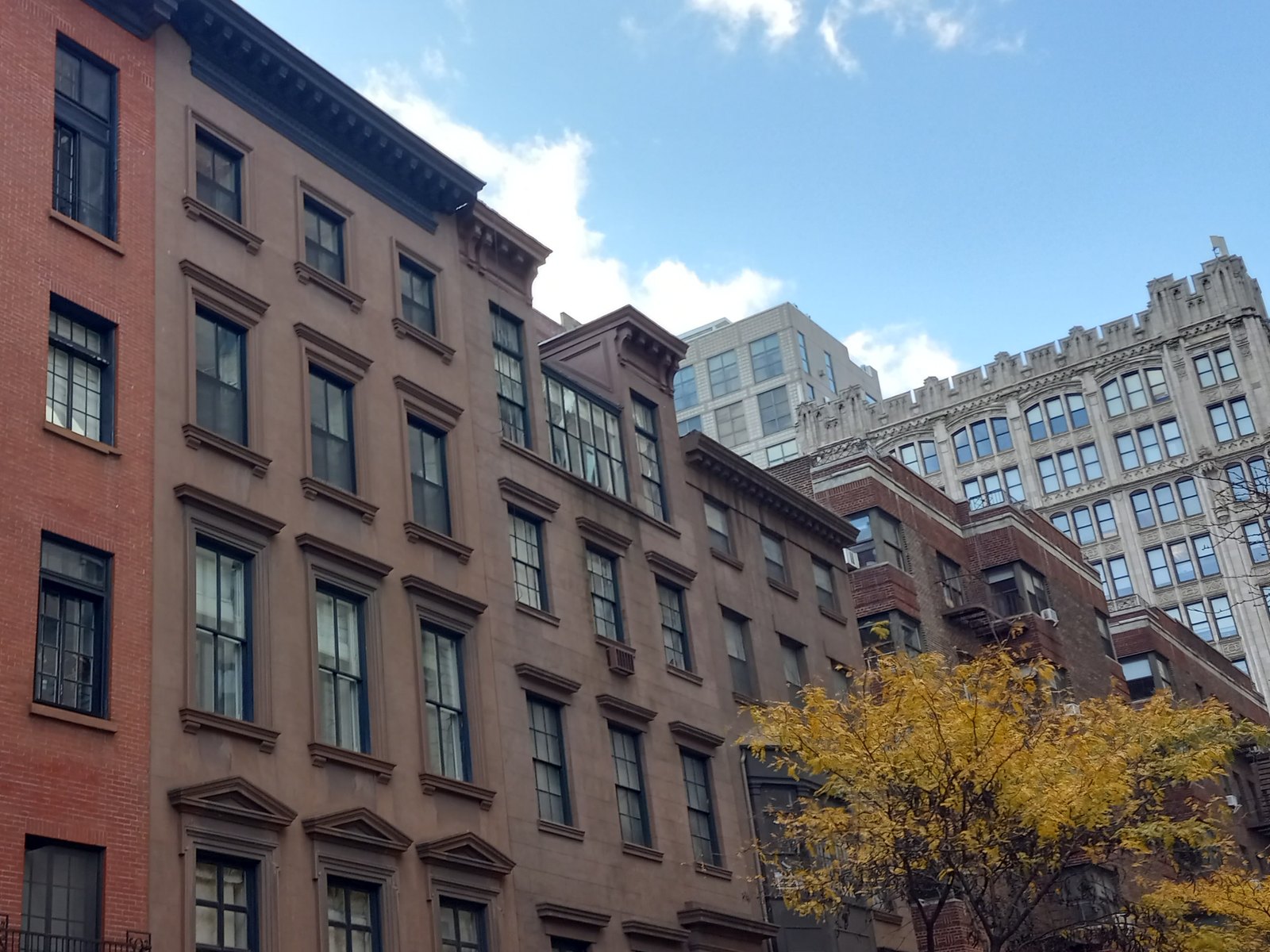
Gramercy Park is the only neighborhood in Manhattan named for a private, locked park. The roughly two-acre square between East 20th and East 21st Streets was laid out by Samuel B. Ruggles beginning in 1831 and is held in trust for the owners of the lots that surround it. Keys go to those properties, not to the neighborhood at large. That one fact means two apartments a block apart can be different products, and an appraiser has to document which side of that line the subject sits on before any comparable sale means anything.
For estate attorneys, executors, trustees, and matrimonial counsel, the useful question is not “what does a Gramercy apartment sell for?” It is “what would this co-op’s shares, or this condo unit, or this townhouse, have sold for on the effective date, with the rights and obligations it actually carried?” This guide explains how an SRA appraiser works through that question. It describes appraisal methodology, not legal or tax advice. Questions about the park trust, a proprietary lease, or title belong with counsel.
What “Gramercy” Means on a Comparable Grid
Neighborhood names in Manhattan are not legal boundaries. Gramercy is commonly described as running from about East 14th Street to East 23rd Street between Park Avenue South and First Avenue, with the park itself at the top of Irving Place and Lexington Avenue. Brokers and data publishers draw the lines differently. BOND New York, for example, reports “Gramercy/Flatiron” as a single area, while other sources split off Kips Bay, Stuyvesant Square, or Union Square.
Within that area, at least three different markets sit side by side:
- The park ring. Buildings on Gramercy Park North, South, East, and West, many of which carry park-key rights. This is the core of the Gramercy Park Historic District, designated by the Landmarks Preservation Commission on September 20, 1966 and extended on July 12, 1988.
- The side streets and avenues. Prewar and postwar co-ops, condo conversions, and rowhouses on East 18th through East 22nd Streets, Irving Place, Lexington, and Third Avenue, most without key rights.
- The southern and eastern edges. Blocks toward East 14th Street, Stuyvesant Square, and First Avenue, which trade more like their immediate surroundings than like the park ring.
The report should say which of these the subject belongs to, and why the comparables were drawn from it.
Park-Key Access: A Documented Amenity, Not a Neighborhood Premium
Gramercy Park is one of only two private parks in New York City. Access is controlled by the park’s trustees. Under the long-standing arrangement, keys are allocated to the owners of the original surrounding lots, the properties pay an annual assessment to the trust, and the locks are changed each year. Key fees, the number of keys allotted, and park rules are set by the trustees and have changed over time, so figures quoted in older press coverage should not be assumed for any effective date.
How an appraiser handles park-key rights
- Confirm the right, don’t infer it. A building named “Gramercy” or a unit with a view of the park does not automatically carry key access. The appraiser asks the managing agent or board for written confirmation of whether the building holds key rights, how many keys are allotted to the subject apartment, and whether the building’s assessment was current on the effective date.
- Separate the view from the key. A park-facing apartment in a key building has two distinct features: the outlook over the square and the right to enter it. A park-facing apartment in a building without rights has only the first. Each is analyzed on its own evidence.
- Look for paired evidence before adjusting. The most defensible support comes from sales of similar apartments in key and non-key buildings close to each other, or from resales within the same building. If that evidence is thin, the report should say so rather than import a premium from listing copy.
- Note obligations along with the benefit. The park assessment is a building cost that reaches shareholders or unit owners through maintenance or common charges, and it belongs in the carrying-cost analysis.
In Gramercy Park, the key is a property right attached to specific lots. A defensible appraisal documents whether the subject’s building has it, whether it was in good standing on the effective date, and what the market evidence shows buyers paid for it, rather than treating “Gramercy Park” as a premium that applies to every address nearby.
Co-ops vs. Condos: Different Interests, Different Comparables
Much of Gramercy’s apartment stock is cooperative. The neighborhood includes 34 Gramercy Park East, completed in the 1880s and often cited as one of the oldest surviving cooperative apartment buildings in the city. Condominiums are a smaller but growing share, including conversions such as 18 Gramercy Park South, a 1927 building redeveloped as condominiums in the 2010s, and new construction on the avenues. The two forms of ownership are not interchangeable on a comparable grid.
| Factor | Co-op | Condo |
|---|---|---|
| What is owned | Shares in the corporation plus a proprietary lease for the apartment | Real property: the unit and a percentage of common elements |
| Monthly carrying cost | Maintenance, including the apartment’s share of building real estate taxes and debt service on any underlying mortgage | Common charges plus the unit’s own real estate taxes |
| Transfer | Board approval required; financing limits and a flip tax may apply | Usually a right of first refusal only; no flip tax in most buildings |
| Best comparables | Resales in the same building, then similar co-ops with similar maintenance and board terms | Resales in the same building, then similar condos of the same vintage |
Summary of typical Manhattan structures. Each building’s offering plan, bylaws, proprietary lease, and house rules control.
Co-op details that move value
- Shares and maintenance. The number of shares allocated to the apartment drives its share of maintenance. Two similar apartments with different maintenance are different products, and the comparison has to account for the difference in carrying cost.
- The underlying mortgage. A co-op’s blanket mortgage is part of what a shareholder is effectively carrying. The appraiser reviews the building’s most recent financial statements for the balance, rate, and maturity on the effective date. A building facing a refinancing at a higher rate, or a large balloon payment, is in a different position from one with little or no debt.
- Flip tax. Many Manhattan co-ops charge a transfer fee on sale, often paid by the seller, calculated as a percentage of price, a per-share amount, or another formula in the bylaws. The appraiser identifies the formula and notes it. It is a cost of sale and a fact the market knows, not something to deduct mechanically from value.
- Board approval and financing limits. Minimum down payment rules, financing caps, sublet policies, and pied-à-terre restrictions narrow the buyer pool. Comparables from buildings with similar policies are stronger evidence.
- Assessments and reserves. Special assessments for facade, roof, or elevator work, including work tied to the city’s facade inspection program, should be identified as of the effective date.
For a fuller treatment, see our co-op vs. condo appraisal guide and the Manhattan co-op estate appraisal page.
Prewar, Postwar, and New Construction
- Prewar elevator buildings (roughly 1900s–1930s): plaster walls, higher ceilings, original layouts, and older systems. Window replacements, wiring, and kitchen and bath updates vary widely apartment by apartment.
- Postwar co-ops (1950s–1970s): white- and red-brick buildings on the avenues with more standardized layouts, doormen, and in some cases balconies. They compete with each other more than with the park ring.
- Condo conversions and new construction: modern systems and amenity packages, typically with higher prices per square foot and different buyer expectations. A new-construction condo sale is a weak comparable for a prewar co-op, and vice versa.
Manhattan co-ops are often sold without a measured square footage, so the appraiser documents room count, layout, light, exposure, and floor, and measures where access allows. Adjustments for floor height and exposure should come from resales within the building wherever possible.
Townhouses in and around the Historic District
Gramercy still has rows of nineteenth-century houses on the park and the surrounding side streets. A townhouse is a different appraisal problem from an apartment:
- Legal use and occupancy: the certificate of occupancy, or the absence of one for older buildings, determines whether the house is a legal single-family, two-family, or multi-family. Any regulated rental units affect value and must be documented.
- Landmark status: work on facades, stoops, cornices, windows, and rooftop additions inside the historic district requires Landmarks Preservation Commission approval. The appraiser notes the district status and any open permits or violations on the effective date.
- Width, depth, and condition: lot width, building depth, elevator presence, and the condition of the brownstone or brick facade drive value more than the neighborhood label.
- Park-key rights: a house on one of the original lots may carry key rights in its own name. Those rights are documented the same way as for an apartment building.
Our Manhattan townhouse methodology and Manhattan brownstones guides cover these issues in more depth.
What the Q3 2026 Data Shows (and What It Doesn’t)
The BOND New York Q3 2026 Manhattan sale-market report (UrbanDigs data; we checked it on November 17, 2026) reports the following:
| Q3 2026 measure (BOND New York) | Figure |
|---|---|
| Change in pending sales within the quarter, Gramercy/Flatiron | −27.7% |
| Change in pending sales within the quarter, Kips Bay | −10.9% |
| Change in pending sales within the quarter, Murray Hill | −21.3% |
| Change in pending sales within the quarter, Chelsea | −16.4% |
| Manhattan co-op median sale price (change year over year) | $887,500 (+2.0%) |
| Manhattan condo median sale price (change year over year) | $1,750,000 (+8.4%) |
| Manhattan properties sold (change year over year) | 3,084 (−6.8%) |
Source: BOND New York, Q3 2026 Manhattan Sale Market report, “BOND Heat Index” and market matrices (UrbanDigs data; believed accurate but subject to errors and omissions). Neighborhood boundaries are the publisher’s; Gramercy is combined with the Flatiron District.
Those figures show pending activity in Gramercy/Flatiron slowing more than in neighboring Kips Bay during the quarter. They also show that, borough-wide, co-op and condo medians are far apart, which is one more reason not to mix the two on a grid. These are volume and price-level statements, useful as context for an effective date. They are not time adjustments for a specific apartment. A Gramercy/Flatiron figure blends park-ring co-ops with Flatiron lofts and new condos. Time adjustments should come from resales within the subject building, paired sales, or a trend for the same product type.
Comparable Selection: Building First, Then the Ring
- Same building: resales in the subject’s own building share its maintenance structure, underlying mortgage, flip tax, board, and key status. They are usually the strongest evidence, adjusted for floor, line, exposure, condition, and time.
- Other buildings with the same key status: for a park-ring subject, other key buildings on the park; for a side-street subject, non-key buildings of similar vintage nearby.
- Like ownership and vintage: co-ops against co-ops, prewar against prewar. A wider time window inside the neighborhood with supported time adjustments is usually better than a wider radius.
- Adjacent neighborhoods with care: Flatiron, Union Square, Murray Hill, and Kips Bay sales can bracket a subject, but the report should explain the differences in building type and location.
For the broader borough picture, see our Manhattan appraisal hub and the Chelsea neighborhood guide.
What an Executor or Matrimonial Attorney Should Gather
Gramercy Park Appraisal Document Checklist
- The required effective date (date of death, alternate valuation date, date of commencement, gift date, or current) and the intended use and users
- For a co-op: stock certificate, proprietary lease, number of shares, and recent maintenance statements showing any assessments
- For a condo: unit deed, declaration and bylaws, percentage of common interest, common charge and real estate tax bills
- The building’s most recent audited financial statements, showing the underlying mortgage (for a co-op) and reserves
- The flip tax or transfer fee formula, board financing and sublet policies, and any pending building projects
- Written confirmation from the managing agent of park-key rights, keys allotted, and assessment status on the effective date
- For a townhouse: certificate of occupancy, rent registration if any units are regulated, and any Landmarks permits or violations
- A floor plan or prior measurements, and a list of renovations with approximate dates and costs
Private Assignments for Gramercy Park Property
- Estate / date-of-death: retrospective fair market value as of the date of death or alternate valuation date for Form 706, New York estate filings, probate inventories, and stepped-up basis. The report relies only on sales, building finances, and key status knowable on that date. A co-op estate also involves board approval for a transfer to a beneficiary or a sale by the executor, which counsel will handle; the appraisal values the shares and lease as they stood. See Manhattan estate appraisal, date-of-death appraisals, and our Manhattan co-op estate guide.
- Divorce / equitable distribution: under New York’s Domestic Relations Law §236(B), the court may set a valuation date between the date of commencement and the date of trial. We prepare current and retrospective values for buyout negotiations where one spouse keeps the apartment or house, with the maintenance, assessments, and key status documented for each date. See Manhattan divorce appraisal and date-of-commencement appraisals in NY divorce.
- Gift and trust work: values for gifts of co-op shares, condo units, or townhouse interests, and for trust funding and related-party sales, prepared for review by the client’s CPA and counsel. See our gift tax appraisal guide.
Dave Lister holds the SRA designation from the Appraisal Institute and is a New York State Certified Residential Appraiser. Madison & Park Appraisal prepares USPAP-compliant reports and has experience with estate, date-of-death, retrospective, and divorce assignments across Manhattan. Each report states its intended use and intended users and documents the evidence behind every adjustment. Attorney intake details are on our For Attorneys page.
Frequently Asked Questions
Does every Gramercy Park apartment come with a key to the park?
No. Key rights belong to the properties on the lots that surround the park, under the trustees’ rules. An apartment elsewhere in the neighborhood, or a park-view apartment in a building without rights, does not carry a key. The appraiser confirms the building’s status in writing for the effective date.
Is the co-op’s flip tax deducted from the appraised value?
Not automatically. The flip tax is a known cost of sale written into the building’s documents, and comparable sales in the same building were made subject to it. The appraiser identifies the formula and reports it, and relies on market evidence rather than a mechanical deduction.
Can a condo sale be used to value a Gramercy co-op?
Only as secondary support, with an explanation. A condo buyer acquires real property with its own taxes and fewer transfer restrictions. A co-op buyer acquires shares subject to a board, maintenance, and the building’s debt. Co-op sales of similar vintage and key status come first.
Can you appraise a Gramercy apartment as of a past date?
Yes. Retrospective appraisals as of a date of death, alternate valuation date, date of commencement, or gift date are a core part of our private work. The report uses only sales, building financial information, and park-key status that were knowable as of that effective date.
Final Thoughts
Gramercy Park rewards careful work. Whether the building holds park-key rights, how the co-op’s maintenance and underlying mortgage compare, what the flip tax and board policies are, and whether the subject is prewar, postwar, or new construction all have to be documented before the comparables mean anything. The Q3 2026 figures show slower pending activity in Gramercy/Flatiron than in nearby Kips Bay. That is useful context for the effective date. It does not replace evidence about the specific building and apartment.
Need a Gramercy Park Appraisal?
For estate and date-of-death, divorce, gift, trust, or private valuation of Gramercy Park co-ops, condominiums, and townhouses, we provide USPAP-compliant appraisals. SRA-designated, New York State Certified Residential Appraiser.
Get a Free QuoteHero photo: Gramercy Park, Manhattan in December 2024, by Kidfly182, via Wikimedia Commons, licensed CC BY 4.0; cropped and resized.
← Back to Insights