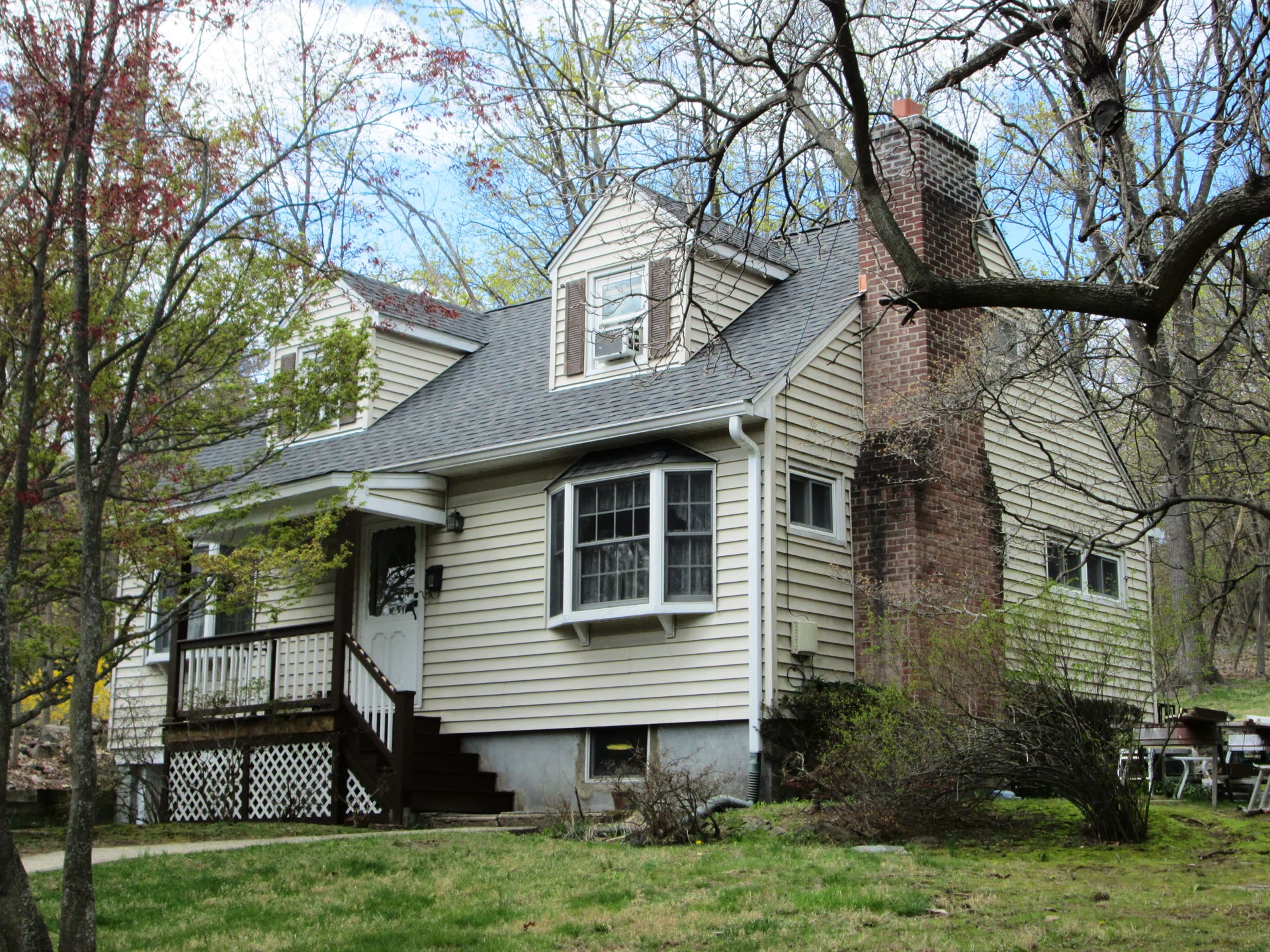
In a New York divorce, the marital residence is often the largest asset on the balance sheet — and the date that matters for its value is frequently not “today,” not the listing date, and not the closing date of a future sale. Matrimonial counsel routinely need a date-of-commencement opinion of market value: what the home was worth as of the date the action was commenced (or another court-defined valuation date), supported by market evidence that existed as of that date.
This briefing is for attorneys and parties who need a USPAP-compliant private appraisal for equitable distribution — not a lender form. It covers why commencement-date valuation differs from current-market work, what a retrospective report must document, dual appraisals and buyouts, and engagement-letter terms. Madison & Park prepares divorce appraisals across Westchester, Manhattan, and licensed Connecticut practice (including Greenwich), with SRA designation and retrospective / date-of-death experience. In New York, the firm is also Court Approved; that designation applies to New York practice only.
Why Date of Commencement Matters Under Equitable Distribution
New York’s equitable-distribution framework treats the marital home as marital property subject to division. Courts and counsel need a credible value tied to a defined effective date so that buyouts, offsets, and settlement math are grounded in the same timeline as other assets and debts. A commencement-date appraisal answers a different question than a sale-ready “as of today” appraisal:
- Commencement / valuation date: Market value as of the action’s start (or other ordered date), using sales and listings known or knowable as of that date.
- Listing or contract date: Useful for marketing strategy, but not automatically the legal valuation date.
- Closing date: A realized sale price — powerful evidence when it exists, but often unavailable when one spouse will buy out the other or the case settles before a sale.
- “Today’s” AVM or broker estimate: A current snapshot that can embed post-commencement price movement, renovations, or market shifts that the court may treat as separate from the valuation-date question.
When prices have moved between commencement and settlement, the wrong effective date can skew the marital estate substantially on a single Westchester or Manhattan property. Pinning the engagement to the correct date early reduces later disputes over which number belongs in the spreadsheet.
A date-of-commencement appraisal is not a forecast of what the house might sell for next spring. It is a retrospective opinion of what a willing buyer would have paid a willing seller on the valuation date, under market conditions then existing.
For a broader overview of divorce valuation practice, see our divorce appraisal service page and related Insights on equitable distribution in NY and CT and divorce home appraisals.
What a Retrospective / As-of-Commencement Appraisal Must Document
A commencement-date assignment is typically a retrospective appraisal: the effective date is in the past, while the report is written later. USPAP and professional practice require the appraiser to analyze the market as it existed on that date — not to import hindsight from later sales that would not have been available to a buyer or seller then. In practical terms, the file and report should show:
- Clear effective date matching the summons / commencement date or the date ordered by stipulation or court.
- Comparable sales that closed near the effective date (and listings or pending contracts known as of that date, when used carefully and disclosed).
- Market-conditions analysis as of the effective date — whether that competitive market’s prices, inventory, days on market, and sale-to-list behavior were rising, stable, or softening at that time — without substituting today’s trend chart for yesterday’s evidence.
- Property condition and characteristics as of the effective date, with extraordinary assumptions or hypothetical conditions stated when the appraiser cannot fully verify historical condition (for example, when inspection occurs years later and counsel agrees on assumptions about renovations completed after commencement).
- Intended users and intended use — typically counsel and the parties for equitable distribution / settlement / trial support — stated so the report is not misread as a mortgage lending appraisal.
Hindsight is the most common technical failure: citing a post-commencement sale as contemporaneous evidence, or adjusting for a market move that had not yet occurred. More on methodology: retrospective appraisals and what a retrospective appraisal is.
Commencement-Date File Checklist
- Effective date stated on every value conclusion page
- Comps selected for proximity in time and location to that date
- Market evidence limited to what was knowable as of the effective date
- Post-date renovations / damage / market moves disclosed and handled with assumptions if needed
- Intended use: equitable distribution / divorce — not lending
- Engagement letter attached or referenced in the workfile
Dual Appraisals and Buyout Negotiations
When spouses disagree on value, each side may retain an appraiser. Dual appraisals are common in Westchester and Manhattan matrimonial practice. They are not a failure of process — they are how counsel stress-test assumptions about condition, comparable selection, and market timing.
Productive dual-appraisal scenarios usually share these traits:
- Same effective date on both engagements so the opinions are comparable.
- Same property rights (typically fee simple interest in the residence; co-op or condo rights as defined by the offering plan / proprietary lease where applicable).
- Transparent scopes — interior inspection when possible, or agreed extraordinary assumptions if access is limited.
- Settlement use — counsel often use the two opinions as brackets for a buyout number, or stipulate to a third appraiser / average / midpoint depending on case strategy.
Buyout negotiations work best when both reports answer the same question. A current-market appraisal on one side and a commencement-date appraisal on the other are two different assignments — aligning the date in both engagement letters avoids that mismatch.
Westchester, Manhattan, and Greenwich Practice Notes
Housing stock in these markets is not interchangeable. A commencement-date assignment in New Rochelle, Scarsdale, or Bronxville faces different comparable pools than a Manhattan co-op or a Greenwich waterfront residence. Practical notes:
- Westchester single-family: Style, lot utility, condition, and closed sales in the competitive set drive the grid. Countywide medians are context — not a substitute for subject-specific comps as of the effective date.
- Manhattan co-ops and condos: Building factors, floor, views, maintenance / common charges, and transferability rules matter. Co-op appraisals must reflect the ownership interest valued — not a fee-simple suburban template.
- Waterfront and complex sites: Frontage, elevation, flood-zone status, and site utility can dominate; use waterfront evidence that existed as of the valuation date.
- Connecticut (including Greenwich): Madison & Park is licensed in Connecticut, SRA-designated, with USPAP retrospective and date-of-death experience. New York “Court Approved” status applies to New York practice only — never as a CT credential.
For cross-border matters (NY marital home and CT second home, or the reverse), specify jurisdiction, license, and valuation date for each property in separate scopes.
Why Lender Appraisals and AVMs Are Usually the Wrong Tools
A mortgage appraisal answers a lender’s underwriting question under GSE or investor guidelines. A Zillow-style AVM answers a model’s question with public and proprietary data that may lag, miss condition, or blend building-level noise in co-ops. Neither is designed as an equitable-distribution work product:
- Lender appraisals often use a current effective date, lending forms, and intended users limited to the lender/client — not counsel and the court.
- AVMs do not inspect, do not interview, and do not document extraordinary assumptions about renovations completed after commencement. They also do not produce a USPAP-compliant certification suitable for many matrimonial uses.
- Broker price opinions / CMAs can be useful marketing tools, but they are not a substitute for an independent appraisal when counsel needs a defensible value opinion for negotiation or testimony.
Reusing a refinance appraisal for a divorce commencement date is a common shortcut — and a frequent source of dispute when the other side notices the wrong date, wrong intended use, or missing retrospective analysis.
What Attorneys Should Put in the Engagement Letter
Clear scoping prevents most appraisal disputes before they start. At minimum, the engagement letter (or appraisal order) should specify:
- Effective date — commencement date, or other stipulated / ordered valuation date, written as a calendar date.
- Property identification — address, unit, tax ID, and ownership type (fee simple, condo, co-op).
- Intended use — equitable distribution / divorce settlement / litigation support (as applicable).
- Intended users — named counsel and parties; whether the report may be shared with a mediator, court, or opposing expert.
- Scope of inspection — interior/exterior, or exterior-only with stated limitations.
- Extraordinary assumptions / hypothetical conditions — e.g., condition as of commencement if later renovations occurred; assumed completion of a renovation that was unfinished on the valuation date; treatment of personal property vs. real property.
- Reporting format and deadline — narrative or form report, draft review window, and whether testimony may be required.
- Fee and payment responsibility — which party (or retainer from escrow) pays, especially important when access disputes delay inspection.
Counsel who treat the engagement letter as a checklist rather than boilerplate get reports that plug directly into settlement models. For attorney-oriented intake, see For Attorneys.
Engagement Letter — Quick Insert Language
- Effective date of value: [commencement / stipulated date]
- Intended use: equitable distribution in [caption]
- Intended users: counsel for both parties / named firm(s)
- Interest appraised: fee simple / condo / co-op shares as defined
- Assumptions: condition and improvements as of effective date unless otherwise stated
How Madison & Park Supports Private Divorce Appraisals
Madison & Park Appraisal provides private, attorney-friendly residential appraisals for divorce and equitable distribution — including date-of-commencement and other retrospective effective dates — across Westchester County, Manhattan, and licensed Connecticut coverage. Dave Lister, SRA, is a Certified Residential Appraiser with extensive USPAP retrospective and date-of-death experience; New York Court Approved status applies to New York matters only.
Typical divorce workflows include single-party engagements, dual appraisals with matched effective dates, and reports scoped for mediation or trial support. For a commencement-date value on a marital home — or a current-date opinion labeled as a separate assignment — call (914) 413-3800 or use our contact form.
Final Thoughts
Date-of-commencement appraisals exist because equitable distribution needs a value tied to a legal timeline, not a marketing timeline. Retrospective discipline — evidence as of the effective date, honest assumptions about condition, and engagement letters that name the date, users, and use — is what separates a usable matrimonial appraisal from a recycled lender form or an AVM screenshot. Align the question first; the number follows.
Need a Date-of-Commencement Divorce Appraisal?
Private, USPAP-compliant appraisals for NY equitable distribution and CT matrimonial matters — Westchester, Manhattan, and Greenwich. Call (914) 413-3800 or request a quote.
Get a Free Quote