
It happens in a lot of New York and Connecticut divorces: each side retains an appraiser, both reports are signed by credentialed professionals, and the values for the same house are $150,000 or $300,000 apart. Clients assume someone made a mistake. Usually, nobody did. The two appraisers answered slightly different questions, used different evidence, or made different judgment calls, and the gap is the sum of those differences.
This briefing is for matrimonial attorneys, mediators, and parties in Westchester County, Manhattan, and Greenwich / Fairfield County who are holding two appraisals that don’t agree. It explains where the gaps usually come from, how to read two reports side by side, and how to scope the work so the numbers can be reconciled or settled rather than argued in the abstract. Madison & Park is New York Court Approved for NY practice, SRA-designated, and Licensed in Connecticut, with extensive USPAP divorce and retrospective appraisal experience.
When two divorce appraisals disagree, the first question is not “which appraiser is right?” It is “were they appraising the same property, the same interest, on the same date, under the same conditions?” Surprisingly often, the answer is no.
Gap #1: Different Effective Dates
An appraisal is an opinion of value as of a stated effective date. If one report values the home as of the date of commencement and the other as of a current date close to trial, the reports can both be correct and still differ, because the market moved in between. In parts of Westchester and Fairfield County where prices have risen over the past few years, a gap of 12 to 24 months between effective dates can explain a meaningful share of the difference on its own.
Check the effective date on page one of each report before anything else. If the dates differ, the fix is not to average the reports but to agree which date the matter requires and ask for the missing date. Background: date-of-commencement appraisals in NY divorce.
Gap #2: Different Property Condition or Assumptions
Divorce homes are often mid-renovation, deferred-maintenance, or recently improved by one spouse. One appraiser may value the property “as is,” another “as if” a kitchen or roof project were complete, and a third may have assumed a finished lower level counts as living area. Each of those is a different assignment. Look for:
- Extraordinary assumptions and hypothetical conditions — USPAP requires them to be disclosed. If one report values the home as if repairs were made and the other doesn’t, that alone can explain a large gap.
- Inspection access — an interior inspection versus an exterior-only or “drive-by” assignment because the other spouse wouldn’t grant access. Exterior-only reports rely on assumptions about interior condition that may be wrong in either direction.
- Gross living area (GLA) — below-grade space should not be counted as above-grade GLA under standard residential practice. Two reports that measure the same house at 3,100 vs. 3,600 square feet will diverge on every comparable adjustment.
Gap #3: Different Comparable Sales
This is the most visible difference and the one clients notice first. Two appraisers in the same market can reasonably choose different comps, but the choices should be explained. When reviewing two reports, ask:
- Are the comps from the subject’s competitive market — the same village or municipality, the same building (for Manhattan co-ops and condos), or waterfront/non-waterfront set in Greenwich?
- Are the sales closed before the effective date? A retrospective value should rely on information knowable as of that date.
- Did either appraiser skip an obvious nearby sale? If so, does the report say why (non-arm’s-length transfer, major renovation, estate sale in poor condition)?
- Are list prices and days on market shown? A comp that sold after 9 days at 108% of list says something different about the market than one that sat 140 days and took a price cut.
Gap #4: Different Adjustments and Market-Conditions Analysis
Even with the same comps, the adjustments can differ: how much a pool, a garage bay, a lot-size difference, or a water view is worth, and whether older sales were adjusted for time. A report that applies a 0% time adjustment in a market where sale prices clearly rose over the prior year will tend to undervalue the subject; one that applies an aggressive time adjustment with no support may overshoot.
Good reports tie market-conditions conclusions to measurable data — closed-sale prices, inventory, days on market, sale-to-list ratios, and sales volume — over the months leading into the effective date. If one report has that analysis and the other simply checks “stable,” that difference matters.
Illustrative Example (hypothetical numbers, not a real property)
- Report A (husband’s appraiser): $1,450,000 as of the commencement date, exterior-only, 3,600 sq ft GLA including finished basement
- Report B (wife’s appraiser): $1,720,000 as of a current date 18 months later, interior inspection, 3,100 sq ft above-grade GLA
- Same date, same interest, same GLA method, and an interior inspection would narrow most of the gap before anyone debates comps
- The remaining difference (say, $60,000–$90,000) is where the real valuation argument lives
Gap #5: Different Interest or Intended Use
In Manhattan, a co-op is not real property in the deed sense: the interest is shares in the cooperative corporation plus a proprietary lease, and the right comps are co-op sales, ideally in the same building. A report that values a co-op off nearby condo sales is answering a different question. In Westchester and Greenwich, watch for reports that value the home with a pending lot split, accessory unit, or development potential that the other report ignores. See our Manhattan co-op and condo divorce guide.
Also read the intended use statement. A refinance or lender appraisal prepared during the marriage was written for a lender, with a different intended user and sometimes a different scope, and it is not a substitute for a divorce appraisal. Related: private vs. lender appraisals for estate and divorce.
How Attorneys Reconcile Two Reports
- Line them up. Effective date, interest appraised, inspection type, GLA, condition rating, assumptions, comps, and adjustments, side by side. Most gaps become obvious on one page.
- Fix the assignment differences first. If the dates or assumptions differ, ask one or both appraisers to address the missing date or condition in an update or supplemental report.
- Isolate the true judgment calls. What’s left is usually two or three adjustment or comp-selection disagreements, which are far easier to negotiate than a single headline number.
- Consider a jointly retained appraiser. Where the budget or the court favors a neutral number, a single jointly retained appraisal with an agreed scope often costs less than two reports plus the argument about them. See divorce real estate appraisal for equitable distribution.
- Consider an appraisal review. USPAP Standard 3 covers appraisal review — a separate assignment in which a qualified appraiser evaluates whether another appraiser’s work is credible and adequately supported. It is useful when counsel needs to understand a report’s weaknesses without commissioning a full second appraisal.
Two divorce appraisals that differ by $250,000 rarely contain a $250,000 disagreement about value. Strip out the date, condition, and measurement differences, and the real dispute is often a fraction of the headline gap.
Westchester, Manhattan & Greenwich Considerations
- Westchester County: Village-level markets (Scarsdale, Rye, Bronxville, Larchmont, Chappaqua and others) can move differently from the county median, and comps from across a municipal line can change a value meaningfully. Local context: Westchester divorce appraisal.
- Manhattan: Building-specific factors — maintenance or common charges, flip taxes, assessments, and the building’s own recent sales — often drive the disagreement more than neighborhood trends. Service page: Manhattan divorce appraisal.
- Greenwich / Fairfield County, CT: High-value and waterfront homes often have thin sales volume, so reasonable appraisers may reach further in time or distance for comps; the report should explain why. Madison & Park handles these as Licensed in Connecticut · SRA · USPAP divorce appraisals. Related: Connecticut / Greenwich divorce appraisals.
Scoping the Engagement So the Numbers Line Up
Divorce Appraisal Engagement: Quick Insert Language
- Effective date(s): [date of commencement / stipulated date / current]
- Interest appraised: [fee simple / condo unit / co-op shares and proprietary lease]
- Inspection: interior and exterior, with access arranged through counsel
- Condition basis: as is on the effective date; any hypothetical condition described precisely
- GLA method: above-grade living area measured per standard residential practice; below-grade area reported separately
- Intended use: equitable distribution analysis in [caption]; intended users: [named counsel and parties]
When both sides agree on those terms up front — or a single appraiser is jointly retained under them — the reports that come back can actually be compared. For attorney intake and turnaround, see For Attorneys and the firmwide divorce appraisal page.
How Madison & Park Helps
Madison & Park Appraisal prepares private, attorney-friendly residential appraisals for divorce across Westchester County, Manhattan, and licensed Connecticut coverage. Dave Lister, SRA, is a Certified Residential Appraiser and New York Court Approved for NY matters, with extensive USPAP experience on commencement-date, current-date, and retrospective divorce assignments. Reports state the effective date, interest, inspection type, measurement method, and every assumption in plain terms, so counsel can see exactly what was appraised.
If you are holding two reports that don’t agree, or want to scope one appraisal both sides can work from, call (914) 413-3800 or use our contact form. When the next step is a buyout, see marital home buyout appraisals.
Final Thoughts
Two credentialed appraisers can reach different values for the same house without either being wrong, but the difference should always be explainable. Check the effective date, the interest, the inspection, the square footage, and the assumptions before arguing about comps. Most of the headline gap usually disappears, and what remains is a narrow, negotiable disagreement grounded in market evidence.
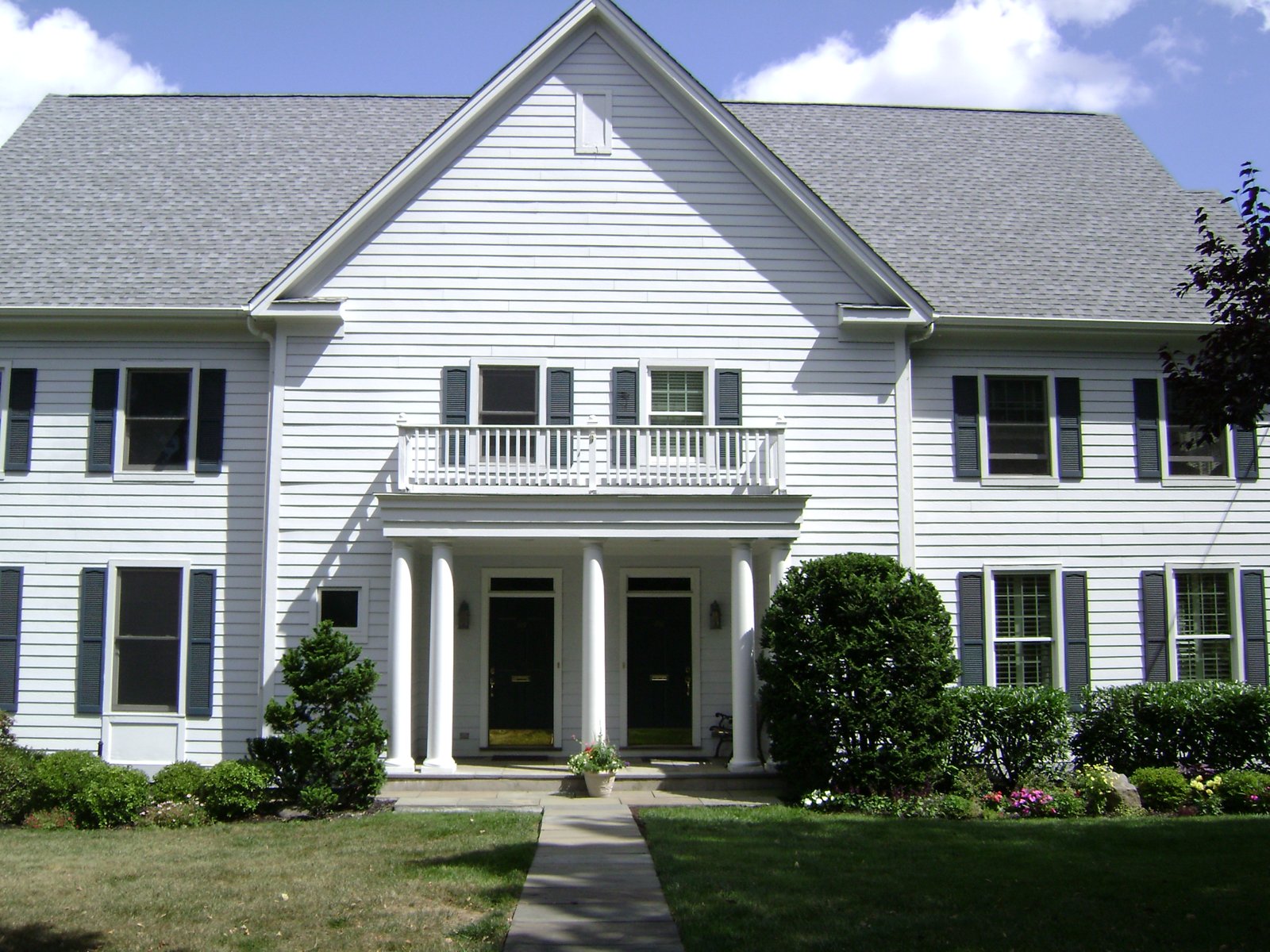
Hero photo: Edgewood House, Pelham Manor, Westchester County, NY, by ALT55-VictorM, via Wikimedia Commons, licensed CC BY-SA 3.0; resized.
Two Appraisals That Don’t Agree?
Private, USPAP-compliant divorce appraisals scoped so the numbers can be compared and settled — Westchester, Manhattan, and Greenwich. Court Approved (NY) · SRA · Licensed in Connecticut. Call (914) 413-3800 or request a quote.
Get a Free Quote