
When a married homeowner dies and the house passes to the surviving spouse, there is often no estate tax due and no sale in sight. It is easy to conclude that nobody needs to know what the house was worth on the date of death. In our experience, that is the appraisal that executors, surviving spouses, and their advisors most often wish they had ordered at the time.
This briefing is for estate attorneys, CPAs, wealth advisors, and executors in Westchester, Manhattan, and Greenwich / Fairfield County. It covers why the first death is a valuation event even when no tax is owed: federal portability, the half step-up on jointly owned homes, trust funding, and the surviving spouse’s eventual sale. The tax and legal conclusions belong to counsel and the CPA; the appraiser supplies a supportable value as of the date of death. Madison & Park is New York Court Approved for NY practice, SRA-designated, and Licensed in Connecticut, with extensive USPAP date-of-death and retrospective appraisal experience.
The first spouse’s death sets two numbers the surviving spouse and heirs will need later: the surviving spouse’s basis in the inherited share of the home, and the unused exclusion carried forward by portability. Both are measured as of the date of death. An appraisal made now, with the house as it was, is the strongest support either number will ever have.
Reason One: Federal Portability (DSUE)
For 2026, the federal basic exclusion amount is $15,000,000 per person (IRS, What’s New — Estate and Gift Tax). If the first spouse’s estate does not use all of it, the executor can elect to pass the unused amount, the deceased spousal unused exclusion (DSUE), to the surviving spouse. The election is made on a complete and timely filed Form 706, even when no federal estate tax return would otherwise be required.
- Deadline. A Form 706 is generally due nine months after death, with an extension available. For estates not otherwise required to file, Revenue Procedure 2022-32 provides a simplified method to elect portability up to the fifth anniversary of death (Rev. Proc. 2022-32).
- Estimated values. For a return filed only to elect portability, Treasury Regulation § 20.2010-2 allows the executor to estimate the value of property that qualifies for the marital or charitable deduction, but only with due diligence and in good faith, reported under penalties of perjury (26 CFR § 20.2010-2).
- The return can be revisited. The IRS may examine the first spouse’s return to determine the DSUE amount when the surviving spouse’s estate or later gifts are examined, even after the normal limitations period for the first return has run. The value of the house at the first death can matter decades later.
Portability is a federal concept. Neither New York nor Connecticut lets a surviving spouse use a deceased spouse’s unused state exemption, so state estate tax planning, including New York’s estate tax cliff, runs on its own track. Connecticut also has its own filing requirements with the Probate Court; counsel will confirm what applies.
Reason Two: The Half Step-Up on a Jointly Owned Home
Inherited property generally takes a basis equal to its fair market value at the date of death under IRC § 1014 (26 U.S.C. § 1014). For married couples, the key question is how much of the house was included in the first spouse’s estate.
| How the home was titled | Generally included at first death | Surviving spouse’s basis after the first death |
|---|---|---|
| Joint tenants with right of survivorship or tenants by the entirety, spouses only | One-half, under IRC § 2040(b) (26 U.S.C. § 2040) | Date-of-death value of the decedent’s half, plus the survivor’s original basis in their own half |
| Owned solely by the deceased spouse, passing to the survivor | The whole property | Date-of-death value of the whole property |
| Owned solely by the surviving spouse | None | Unchanged original basis |
| Held in a trust | Depends on the trust terms | For counsel to determine from the documents |
General overview only, not tax or legal advice. New York and Connecticut are not community property states; couples who owned property while living in a community property state should ask counsel how that affects basis.
Example: a couple bought a Scarsdale home for $900,000 as tenants by the entirety, and it is worth $3,000,000 on the date of the first death. The survivor’s basis generally becomes $1,500,000 for the decedent’s half plus $450,000 for their own half, or $1,950,000, before improvements. Without a date-of-death appraisal, the $1,500,000 piece has to be reconstructed later, often after the house has been renovated, the market has moved, and the details have faded. For more on basis, see our guide to stepped-up basis on inherited property.
Reason Three: Funding a Credit-Shelter or Marital Trust
Many Westchester, Manhattan, and Greenwich estate plans divide the first spouse’s assets between a credit-shelter (bypass) trust and a marital share by formula. When a home or a share of a home funds one of those trusts, the trustee needs a date-of-death value to allocate assets correctly. Property held in a typical credit-shelter trust is generally not included in the surviving spouse’s estate, so it generally does not receive a second step-up at the survivor’s death. That makes the first-death value its lasting basis, and another reason to get it right. Which trust receives what is for counsel and the trustee.
Reason Four: The Surviving Spouse Sells
Many surviving spouses eventually sell, sometimes within a year or two. Two points come up repeatedly:
- Basis documentation. The appraisal supports the stepped-up portion of basis on the income tax return for the year of sale.
- The two-year window. Under IRC § 121(b)(4), an unmarried surviving spouse who sells within two years after the spouse’s death may be able to use the $500,000 joint exclusion on gain from a principal residence instead of $250,000, if the other requirements are met (26 U.S.C. § 121). The CPA determines eligibility; the date-of-death appraisal supports the basis side of the calculation.
One administrative note: the IRS instructions state that Form 8971, the basis-consistency statement to beneficiaries, is not required when the Form 706 is filed solely to elect portability (Instructions for Form 8971). That does not reduce the value of good basis documentation; it just means the appraisal is the main record.
What a Date-of-Death Appraisal at the First Death Should Include
- An effective date equal to the date of death, or the alternate valuation date if counsel elects it on a taxable return (see our alternate valuation date guide)
- Market value of the whole property, with ownership and title stated, so counsel and the CPA can apply the correct fractional inclusion
- Sales and market conditions known as of the date of death, measured by price, inventory, days on market, sale-to-list ratios, and volume
- The property’s condition on the date of death, including any work done since, so later renovations do not inflate or confuse the value
- For co-ops and condos: shares or common interest, maintenance or common charges, and same-building sales near the date of death
- Appraiser qualifications and a USPAP-compliant report suitable for the IRS’s qualified appraiser expectations
Already Past the First Death? A Retrospective Appraisal
If the first spouse died months or years ago and no appraisal was made, the value can still be developed as of that date. A retrospective appraisal uses only sales and market data available as of the effective date and relies on photographs, permits, listing records, and the survivor’s recollection to establish the home’s condition then. It is a routine assignment for us, and it is far better done while the portability window or the sale is still ahead than in response to an IRS question.
Westchester, Manhattan & Greenwich Considerations
Westchester. Long-held homes in towns like Scarsdale, Rye, Bronxville, and Chappaqua often carry very large unrealized gains, so the stepped-up half can be worth a meaningful tax saving. See our Westchester date-of-death guide.
Manhattan. Co-op apartments raise their own issues at the first death, including the transfer of shares to the surviving spouse under the proprietary lease. The value should come from building-level evidence. See our Manhattan co-op estate guide.
Greenwich and Fairfield County. Madison & Park is Licensed in Connecticut, SRA-designated, and experienced in USPAP date-of-death valuations. Connecticut has its own estate tax and filing process alongside the federal return, and one appraisal can serve both. See our Greenwich date-of-death guide.
Frequently Asked Questions
If everything passes to the surviving spouse, why appraise the house at all?
Because two later questions depend on the value at the first death. The surviving spouse’s income-tax basis in the inherited share of the home is generally its fair market value on the date of death, and if the executor elects portability, the deceased spouse’s unused exclusion is computed on a Form 706 that the IRS can revisit when the surviving spouse’s own estate or gifts are examined. A date-of-death appraisal made now is far easier to support than a reconstruction years later.
We own the house jointly. Does the surviving spouse get a full step-up?
Usually not in New York or Connecticut. When spouses are the only joint owners, as joint tenants with right of survivorship or tenants by the entirety, IRC § 2040(b) generally includes one-half of the property in the first spouse’s estate, so only that half receives a new basis at death. The other half keeps its original cost basis. The appraisal establishes the date-of-death value of the whole property, from which counsel and the CPA compute the stepped-up half. Couples who lived in a community property state may be treated differently, and that is a question for counsel.
Is a broker’s opinion or online estimate good enough for a portability-only Form 706?
The regulations let an executor filing only to elect portability estimate the value of property that qualifies for the marital or charitable deduction, but the estimate must be made with due diligence and in good faith, and it is reported under penalties of perjury. A credible appraisal is the stronger record, especially for a high-value home, and it also serves as the surviving spouse’s basis documentation for a later sale.
The first spouse died three years ago and no Form 706 was filed. Is it too late?
Possibly not. Revenue Procedure 2022-32 provides a simplified method to elect portability up to the fifth anniversary of death for estates that were not otherwise required to file. That return still needs values as of the date of death, which is a retrospective appraisal. We prepare retrospective date-of-death appraisals using sales and market data known as of that date.
Does Madison & Park appraise homes in Connecticut?
Yes. Dave Lister, SRA, is Licensed in Connecticut and prepares USPAP date-of-death and retrospective appraisals in Greenwich, Stamford, Darien, New Canaan, and across Fairfield County, as well as in Westchester and Manhattan.
How Madison & Park Helps
We prepare date-of-death and estate appraisals for surviving spouses, executors, trustees, and their advisors across Westchester County, Manhattan, and Greenwich and Fairfield County. Each report is prepared under USPAP, states ownership and the effective date clearly, and explains its comparables and adjustments so the CPA, counsel, and, if it ever comes to it, an IRS examiner can follow the work.
Final Thoughts
The first death rarely feels like a tax event, which is exactly why the valuation gets skipped. Ask counsel whether portability should be elected, confirm how the home was titled, and order a date-of-death appraisal while the house is still as it was. The surviving spouse, the trustee, and eventually the heirs will all rely on that number.
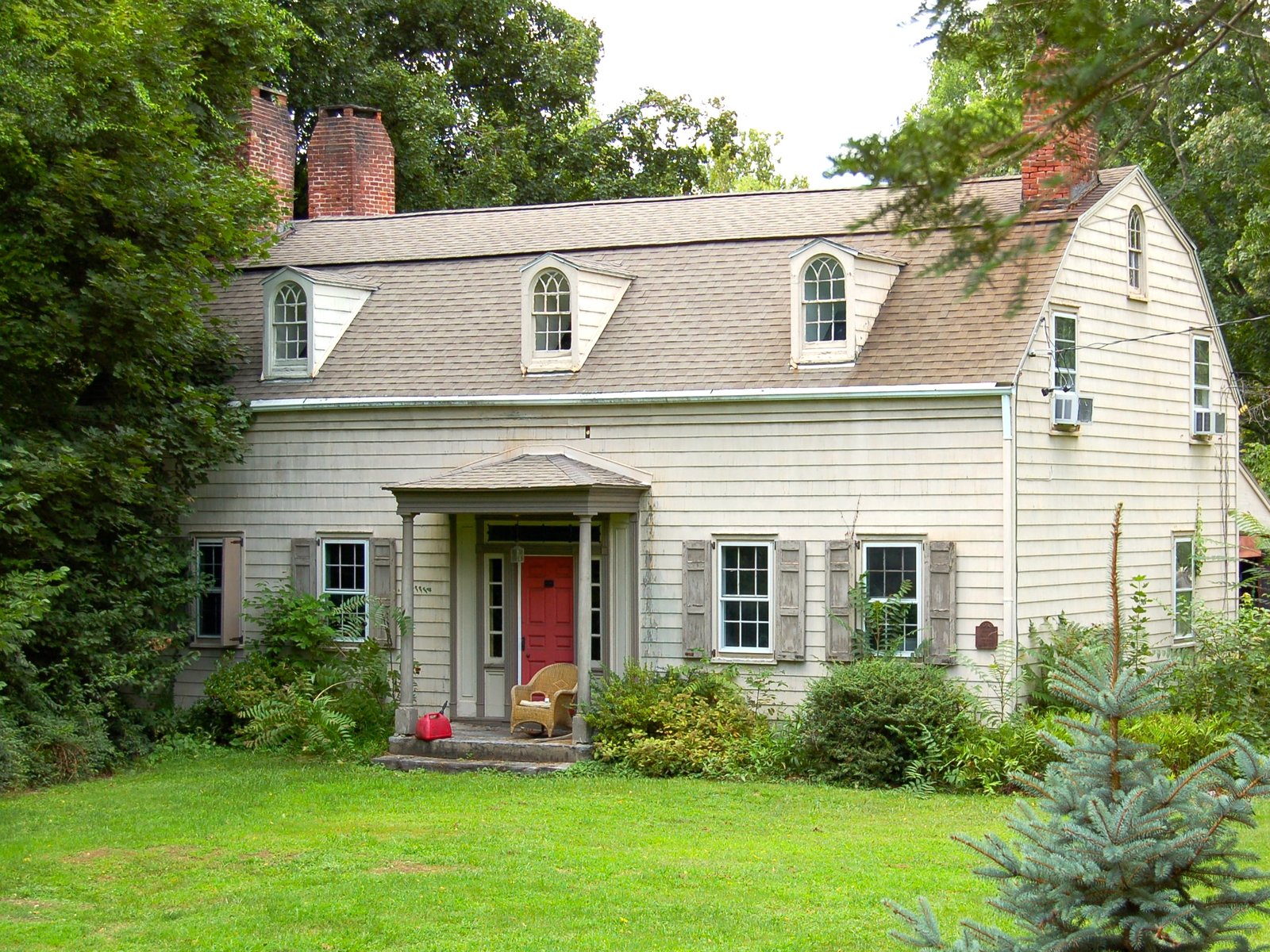
Hero photo: John Jones Homestead, Oregon Road and Durrin Avenue, Van Cortlandtville, Cortlandt, Westchester County, New York, by WindingRoad, via Wikimedia Commons, licensed under CC BY-SA 3.0; cropped and resized.
A Spouse Has Passed?
Date-of-death and retrospective appraisals for portability elections, stepped-up basis, and trust funding, for Westchester, Manhattan, and Greenwich / Fairfield County. Court Approved (NY) · SRA · Licensed in Connecticut. Call (914) 413-3800 or request a quote.
Get a Free Quote