
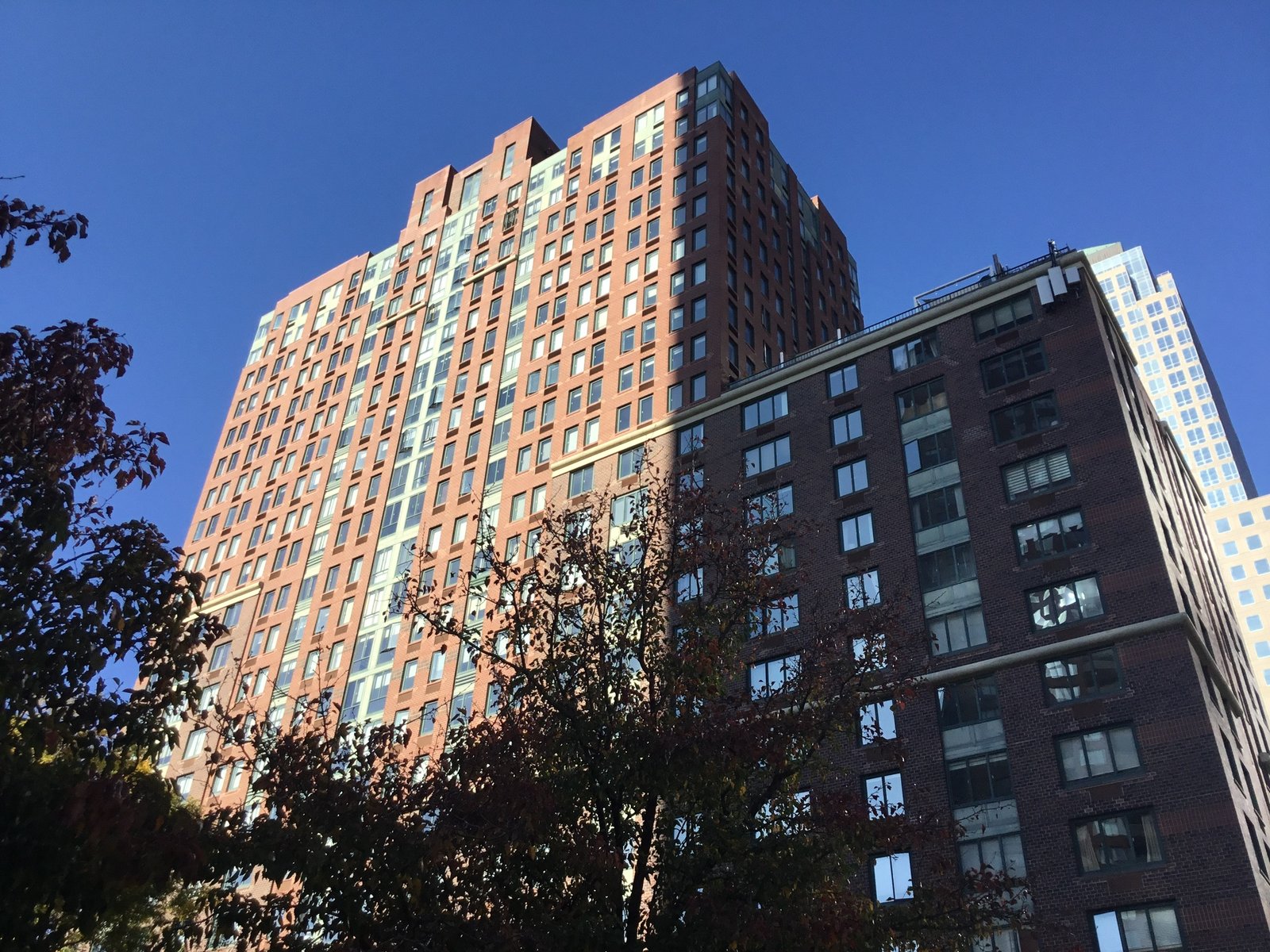
Battery Park City looks like any other high-rise Manhattan neighborhood from the street. On paper it is different from almost everywhere else in the borough. The 92 acres of landfill between West Street and the Hudson River are owned by the City of New York, leased to the Battery Park City Authority (BPCA), a New York State public benefit corporation, and subleased to the owners of each building. A condo owner in Battery Park City owns a unit in a building that sits on leased land. That one fact changes how an appraiser has to read common charges, pick comparables, and explain value.
For estate attorneys, executors, trustees, and matrimonial counsel, the useful question is not “what is a Battery Park City condo worth per square foot?” It is “what would this unit, in this building, under this ground lease schedule, have sold for on the effective date?” This guide explains how an SRA appraiser works through that question. It describes appraisal methodology, not legal or tax advice. Lease interpretation and title questions belong with counsel.
How Ownership Works: Master Lease, Ground Lease, and Unit
- The City owns the land. BPCA holds it under a master lease with the City. State legislation signed by Governor Hochul directs BPCA to extend that master lease to June 18, 2119, which requires the City’s consent as landlord, as reported by The Broadsheet.
- Each building has its own ground lease with BPCA. The residential ground leases and their amendments, including each building’s “rent reset amendment,” are posted on BPCA’s residential ground leases page. Residential building leases currently run through June 2069.
- Condo owners pay two lease-driven charges through common charges. BPCA has described the neighborhood’s condominium stock as 18 buildings with roughly 3,700 units, and has said that PILOT (payments in lieu of taxes, set by the City) makes up about half of a typical owner’s charges while ground rent makes up about 15%. Building operations make up most of the rest.
That structure means two Battery Park City condos with similar asking prices and similar monthly charges today can be on very different cost paths. The building’s lease schedule is part of the property being appraised.
What the Q3 2026 Data Shows (and What It Doesn’t)
The BOND New York Q3 2026 Manhattan sale-market report (UrbanDigs data; we checked it on November 3, 2026) maps the change in pending sales within the quarter by neighborhood:
| Change in pending sales, Q3 2026 | Figure |
|---|---|
| Battery Park City | −29.0% |
| Tribeca | −15.2% |
| FiDi / Civic Center | −9.5% |
Source: BOND New York, Q3 2026 Manhattan Sale Market report, “BOND Heat Index” (UrbanDigs data; believed accurate but subject to errors and omissions). Neighborhood boundaries are the publisher’s.
For Manhattan as a whole, the same report shows 3,084 properties sold in Q3 2026 (down 6.8% from Q3 2025) at a median price of $1,295,000 (up 9.3% year over year), with days on market rising to about 75 by September.
Those figures say contract activity in Battery Park City slowed more than in neighboring downtown markets during the quarter. That is a statement about volume, and it is useful context for an effective date. It is not a time adjustment. Battery Park City has a limited number of condo buildings, so a few sales in one tower can move any neighborhood median. Time adjustments should come from resales within the subject building, paired sales, or a segmented trend for the same product type.
Ground Rent Schedules: Why the Building Matters as Much as the Unit
In 2011 and 2012, twelve condominium buildings negotiated new ground rent schedules with BPCA. BPCA has said those agreements limit ground rent growth until about the late 2030s or early 2040s, with most schedules rising about 3% a year. Several of those buildings also have one-time contractual step-ups written into their recorded rent reset amendments. An October 2026 review of the recorded amendments found step-ups still ahead in 2027 at Liberty Terrace (January 1), Soundings (March 1), and Liberty Court (November 1).
After the fixed schedules end, the leases return to resets based on appraised land value. BPCA’s own condo negotiations briefing describes the existing reset formula as 6% of fair market value and calls those resets “significant and uncertain.” Buildings outside the 2011/12 group follow their own lease terms, and some have reached separate agreements since.
How an appraiser handles a ground rent schedule
- Read the building’s rent reset amendment, not just the budget. A building’s current common charges may have been set before a scheduled step-up takes effect. The appraiser documents which schedule governs and where the building stood on the effective date.
- Compare within the same lease position. A comparable sale in a building that has already absorbed its step-up is not the same product as a unit in a building whose step-up is still ahead. Buyers and their brokers can read the same public schedules, and sale prices can reflect them.
- Don’t deduct the step-up dollar for dollar. A rise in a building’s ground rent reaches an owner through the unit’s share of common charges. The appraiser looks for market evidence of how buyers price higher carrying costs, rather than simply capitalizing the increase and subtracting it.
- Use the facts known on the effective date. For a date-of-death or date-of-commencement value, the schedules, amendments, and public announcements in effect on that date control. Later agreements are not part of a retrospective analysis.
In Battery Park City, a defensible condo value starts with the building’s ground lease schedule. Two units with the same layout and view can sit in buildings whose ground rent is about to rise sharply and buildings whose step-up has already passed. The comparables have to be read through that lens.
The 2069 Question
Every residential ground lease in Battery Park City currently ends in 2069. That is a long horizon, but it is a finite one, and lenders and buyers notice remaining term. As of this writing, the public record shows:
- In 2025, BPCA and Brookfield Properties extended the Brookfield Place commercial ground lease from 2069 to 2119, as announced by the Governor’s office. That deal covers office and retail space, not apartments.
- In June 2026, BPCA and Related Companies amended the ground lease of Tribeca Park, a rental building, keeping its income-restricted units in place through the existing 2069 lease term, according to Related’s announcement.
- BPCA said after a March 2026 community meeting that it is planning ground lease extensions for all residential buildings beyond 2069. As of early October 2026, no public residential extension terms had been announced.
- A state bill to rebate ground rent increases for qualifying owner-occupants passed both houses of the Legislature in 2026. Its status should be confirmed as of any effective date, and whether it would apply depends on the owner’s own circumstances.
An appraiser does not predict the outcome of lease negotiations. The report states the lease term and terms as they stood on the effective date and relies on sales evidence from that period, which already reflects how buyers priced the uncertainty. If counsel asks for a value under a hypothetical extension, that is a hypothetical condition, and USPAP requires it to be clearly labeled along with its possible effect on value.
Physical and Building Factors That Move Value
- Views and exposure: River and harbor views, floor height, and whether a view is protected or could be blocked are major value drivers. Units facing West Street or interior courts are different products from river-facing units in the same tower.
- Building age and systems: Battery Park City’s condo towers were built in waves from the 1980s into the 2000s. Window systems, HVAC, elevators, and facade work vary by building and show up in reserves and assessments.
- Green-building features: Several later towers were built to energy and water efficiency standards. Where the market pays for lower operating costs, that should show in comparable sales and common charges, not as a separate premium.
- Flood exposure and resiliency work: The neighborhood sits on the waterfront, and BPCA has been carrying out multi-year resiliency projects along its edges. The appraiser checks the FEMA flood zone for the building, any flood insurance the condominium carries, and any damage history, and notes construction disruption if it was present on the effective date.
- Outdoor space and parking: Private terraces and deeded or licensed parking are relatively uncommon and should be documented before any adjustment is applied.
Comparable Selection: Inside the Building First
Because the lease structure is unique to Battery Park City, comparables from outside the neighborhood need careful adjustment:
- Same building: Recent resales in the subject’s own tower share its lease schedule, PILOT structure, and building finances. They are usually the strongest evidence, adjusted for floor, line, view, and condition.
- Other Battery Park City condos: Useful when the buildings are in a similar lease position. A sale in a building with a different schedule or an imminent step-up needs a supported adjustment or a clear explanation.
- Tribeca and the Financial District: Fee-simple condos with ordinary real estate taxes are a different ownership interest. They can bracket a Battery Park City subject, but the analysis has to account for the difference in what the buyer is acquiring and what it costs to carry. See appraising Tribeca.
- Like with like: A wider time window inside the neighborhood, with supported time adjustments, is usually better than a wider radius that pulls in fee-simple buildings.
For the broader downtown picture, see our Downtown Manhattan appraisal page, the Manhattan appraisal hub, and the Manhattan housing market 2026 briefing.
What an Executor or Matrimonial Attorney Should Gather
Battery Park City Condo Appraisal Document Checklist
- The required effective date (date of death, alternate valuation date, date of commencement, gift date, or current) and the intended use and users
- Unit deed, condominium declaration and bylaws, and the unit’s percentage of common interest
- Recent common charge statements showing the PILOT, ground rent, and operating components, plus any assessments
- The building’s current budget, most recent audited financial statements, and reserve information
- Any board or managing-agent notices about scheduled ground rent step-ups, BPCA negotiations, or post-2069 extension discussions
- Information on flood insurance, past water damage, and any building-wide projects underway on the effective date
- Floor plan or prior measurements, and notes on terraces, parking, and storage
- A list of renovations with approximate dates and costs
Private Assignments for Battery Park City Condos
- Estate / date-of-death: Retrospective fair market value as of the date of death or alternate valuation date for Form 706, New York estate filings, probate inventories, and stepped-up basis, using only the lease terms and market evidence in effect on that date. See Manhattan estate appraisal and our guide to Manhattan condo estate appraisals.
- Divorce / equitable distribution: Current and date-of-commencement values of a marital condo, including buyout negotiations where one spouse keeps the unit and its future ground rent obligations. See Manhattan divorce appraisal and date-of-commencement appraisals in NY divorce.
- Gift and trust work: Values for gifts of condo units, trust funding, and related-party transfers, prepared for review by the client’s CPA and counsel.
Dave Lister holds the SRA designation from the Appraisal Institute and is a New York State Certified Residential Appraiser. Madison & Park Appraisal prepares USPAP-compliant reports and has experience with estate, date-of-death, retrospective, and divorce assignments across Manhattan. Each report states its intended use and intended users and documents the evidence behind every adjustment. Attorney intake details are on our For Attorneys page.
Final Thoughts
Battery Park City condos reward careful work. The master lease, the building’s ground lease schedule, PILOT, scheduled step-ups, the 2069 horizon, views, and flood exposure all have to be documented before the comparables mean anything. The Q3 2026 figures point to slower contract activity than in Tribeca or the Financial District. That is useful context for the effective date. It does not replace evidence about the specific building and unit.
Need a Battery Park City Condo Appraisal?
For estate and date-of-death, divorce, gift, trust, or private valuation of Battery Park City condominiums, we provide USPAP-compliant appraisals. SRA-designated, New York State Certified Residential Appraiser.
Get a Free QuoteHero photo: 225 Rector Place, Battery Park City, by Kidfly182, via Wikimedia Commons, licensed CC BY-SA 4.0; resized.
← Back to Insights