
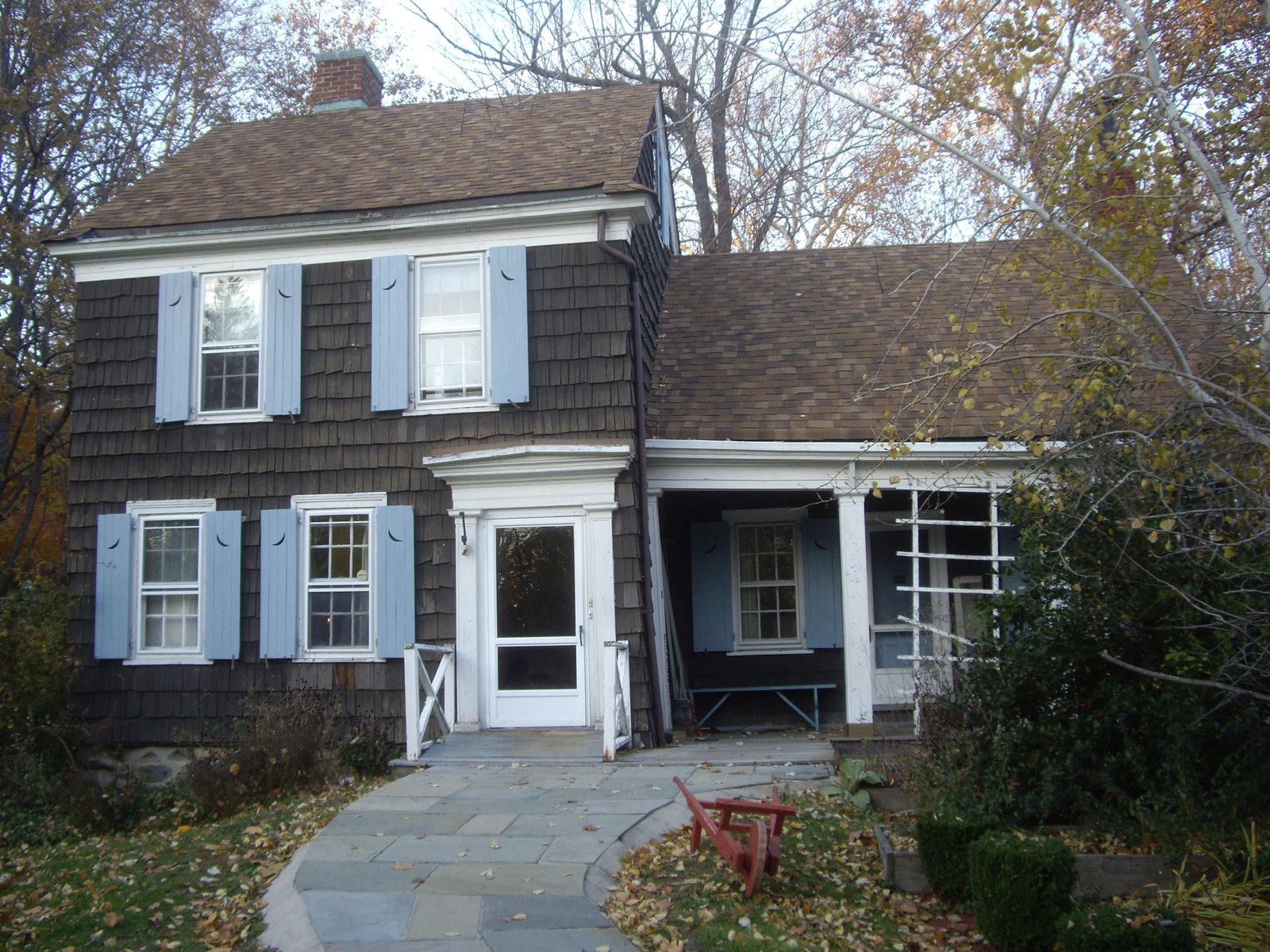
When siblings inherit a house together and can't agree what to do with it, the file usually ends up as a partition action. One heir wants to sell, one wants to keep the house, and one may already be living there. In Westchester, Manhattan, and the rest of New York, the dispute almost always turns on one number: what is the whole property worth? That number sets the buyout price, the settlement range, and the minimum price for a court-ordered sale. A Zillow estimate, a broker's opinion, or the date-of-death appraisal the estate ordered two years ago rarely settles it.
This briefing is for trusts & estates litigators, real estate counsel, and fiduciaries handling co-owner and heir disputes. It covers how New York partition works at a high level, what changes when the property is "heirs property" under RPAPL § 993, why the buyout math depends so heavily on the appraised value, and how to scope a private appraisal that counsel on every side can actually use. It is general information, not legal advice. The statute and the court's orders control.
In a partition dispute, the appraisal does more than inform the negotiation. Under New York's heirs property statute, the buyout price is the court-determined value of the entire parcel multiplied by the percentage interests being bought. Get the value wrong and every co-tenant's number is wrong with it.
Partition in New York: The Two Tracks
New York partition actions are governed by Article 9 of the Real Property Actions and Proceedings Law (RPAPL). Under the general provisions, a co-owner (such as a tenant in common or joint tenant) can ask the court to divide the property physically or, if a division can't be made without great prejudice to the owners, to order a sale and divide the proceeds. For a single-family home, a Manhattan townhouse, or a lot in a Westchester village, physical division is rarely practical, so the real fight is usually over a sale versus a buyout.
New York's version of the Uniform Partition of Heirs Property Act, RPAPL § 993, adds a second track. In any partition action, the court has to decide whether the property is "heirs property." In short, that means residential (or agricultural) property held as a tenancy in common, with no agreement in a record governing partition, where at least one co-tenant took title from a relative and a relative-ownership threshold is met. Among other ways to qualify, 20% or more of the interests are held by relatives, or a co-tenant who inherited lives in the house. Many inherited homes in Westchester and the boroughs fit this definition. When they do, the statute requires a settlement conference, a court determination of fair market value, and a co-tenant buyout right before any sale.
Where the property is still part of an open estate, the litigation may proceed in Surrogate's Court rather than Supreme Court. That is counsel's call. The valuation questions below come up in either forum.
How Value Is Determined Under RPAPL § 993
Once the court finds heirs property, § 993(6) sets the valuation path:
- Agreed value or agreed method. If all co-tenants agree on a value, or on a method of valuation, the court adopts it. A jointly engaged private appraisal is one common "agreed method." It is often the fastest and least expensive route.
- Court-ordered appraisal. If the parties don't agree, and the court doesn't find that the cost of an appraisal outweighs its evidentiary value, the court orders an appraisal by a disinterested real estate appraiser licensed in New York. That appraiser files a sworn or verified appraisal with the court.
- Notice, objection, hearing. The court sends notice of the appraised value, and parties have 30 days to object. The court then holds a hearing on value, where it may also consider other evidence of value offered by a party, and enters its determination before reaching the merits.
- Whole-property assumption. A value determined under the court-ordered paths assumes sole ownership of the fee simple estate. In other words, the statute values the entire house, not a discounted fractional interest.
That last point matters in practice. Outside this statute, buyers of a one-third undivided interest typically pay well under one-third of the whole, because of lack of control and marketability. For heirs property under § 993, the measure is the whole fee simple, and the buyout price is computed from it. Counsel should make sure every appraisal in the file values the right interest for the right purpose.
The Buyout Math, and Why Every Dollar of Value Moves It
Under § 993(7), co-tenants who did not ask for a partition by sale can buy out the interests of those who did. The purchase price is the court-determined value of the entire parcel multiplied by the percentage interests being purchased. Simple arithmetic shows the stakes. If three siblings each hold one-third and one of them sought a sale, every $60,000 change in the appraised value of the whole house changes that sibling's buyout price by $20,000.
If no buyout happens, the statute then looks at partition in kind and, failing that, a sale. The default is an open-market sale through a licensed broker, at a price no lower than the determination of value, unless the court finds sealed bids or an auction would be more economically advantageous for the co-tenants as a group. So the appraised value works as a floor for the listing as well as a buyout benchmark.
Treat the partition appraisal like the buyout price, because under § 993 it effectively is one. Scope it, document it, and review it with the same care counsel would give a contract of sale.
Where a Private Appraisal Fits Before and During the Case
Most heir disputes are resolved, or at least narrowed, around a credible number. A private, USPAP-compliant appraisal is useful at several stages:
- Pre-suit negotiation. Before anyone files, a single appraisal engaged jointly by all heirs (or by the estate) often ends the argument. One heir's Zestimate against another's listing-agent CMA rarely does.
- The § 993 settlement conference. The court must hold a mandatory conference within 60 days after a request for judicial intervention is filed. Parties who arrive with a documented market-value opinion can discuss buyout terms, financing, and timing instead of trading guesses.
- An agreed value or method. If the co-tenants agree to adopt a jointly engaged appraisal, the court adopts that value. This can avoid the cost and delay of a separate court-ordered appraisal.
- Other evidence of value. Where the court orders its own appraisal, a party's separately commissioned appraisal can help counsel evaluate the filed appraisal and decide whether, and on what grounds, to object within the 30-day window.
- Retrospective dates. Some disputes also need value as of an earlier date, such as the date of death for basis or estate reporting. That is a separate effective date and should be a separate, clearly labeled opinion. See retrospective appraisals and stepped-up basis on inherited property.
A refinance or purchase appraisal is the wrong tool here. It is written for a lender, with lender intended users and a lending purpose. Our Insights on private vs lender appraisals explain why.
Valuation Issues That Come Up in Heir and Co-Owner Disputes
Access and the occupying heir
When one co-tenant lives in the house, interior access can become a bargaining chip. A USPAP appraisal can be completed from the exterior with a disclosed extraordinary assumption about interior condition. That number is only as good as the assumption, though, so counsel are usually better served negotiating (or seeking an order for) an interior inspection with a set date and time.
Deferred maintenance and "as is" condition
Inherited homes often have dated kitchens and baths, aging systems, or years of deferred maintenance. The appraisal should value the property as is as of the effective date, with condition supported by photos and comparable sales in similar condition. Comparing it to fully renovated houses on the same street is a common source of objections.
Improvements one co-owner paid for
Credits for taxes, carrying costs, and improvements are an accounting and legal question for counsel and the court. The appraiser's role is narrower. If scoped, a report can include an "as is" value and a hypothetical-condition value (for example, as if a specific addition or renovation had not been made) so the parties can see what that work contributes to market value. Cost is not value. A $150,000 renovation does not automatically add $150,000 to the price.
Location-specific comparables
Westchester values change from village to village and sometimes block to block. A partition appraisal for a house in New Rochelle, Scarsdale, or Yonkers should rely on closed sales from the same competitive market area, adjusted for size, condition, lot, and location. Market conditions should be described only through price, inventory, days on market, sale-to-list ratio, and sales volume as of the effective date. Manhattan co-op shares and condos raise their own issues, including building financials, board and transfer restrictions, and flip taxes. Counsel should confirm with the court how a co-op interest is being handled before scoping that assignment. See our Manhattan co-op estate guide.
A Note for Greenwich and Fairfield County Matters
Connecticut has its own partition statutes (Conn. Gen. Stat. Chapter 919, including § 52-495). It also adopted the Uniform Partition of Heirs' Property Act, codified at Conn. Gen. Stat. §§ 52-503f through 52-503r and effective for actions filed on or after October 1, 2015. The procedures are similar in concept but not identical to New York's, so CT counsel should work from the Connecticut text. For Greenwich and Fairfield County properties, Dave Lister is Licensed in Connecticut, holds the SRA designation, and brings USPAP date-of-death and retrospective experience. See Greenwich estate appraisal.
Engagement-Letter Checklist for Partition and Heir-Buyout Appraisals
- Client and intended users. All co-tenants jointly, the estate fiduciary, or one party's counsel. State whether the report may be shared with other co-tenants and filed with the court.
- Intended use. Pre-suit buyout negotiation, a § 993 settlement conference, an agreed valuation, review of a court-ordered appraisal, or estate and basis reporting.
- Interest appraised. The whole fee simple estate (the § 993 measure for heirs property), unless counsel specifically direct otherwise and the scope is disclosed.
- Effective date(s). Current value for buyout and sale; date of death or another retrospective date if needed. Dual dates should be labeled separately.
- Access. An interior inspection date agreed by the occupying co-tenant, or an exterior-only scope with a disclosed extraordinary assumption.
- Hypothetical conditions. For example, value "as if" a disputed improvement had not been made, if counsel need the contribution isolated.
- Timeline. Settlement conference date, objection deadlines, and draft-review window.
- Fee and payment. Split among co-tenants, paid by the estate, or paid by the retaining party. State this up front.
Partition / Heir Buyout Appraisal: Quick Insert Language
- Client / intended users: [all co-tenants jointly / estate fiduciary / counsel for (party)] in [caption or matter]
- Intended use: market value for co-tenant buyout and partition negotiations; may be shared with all co-tenants and submitted to the court
- Interest appraised: entire fee simple estate (sole-ownership basis), not a fractional undivided interest
- Effective date: [current / date of death / dual dates, separately stated]
- Access: interior and exterior inspection on [date] arranged through [occupying co-tenant / counsel]
- Assumptions: as-is condition as of effective date; personal property excluded; [hypothetical condition, if any]
- Deadlines: settlement conference [date]; draft by [date]
- Fee responsibility: [split equally / estate / retaining party]
How Madison & Park Supports Partition and Heir-Dispute Work
Madison & Park Appraisal provides private, attorney-friendly residential appraisals across Westchester County, Manhattan, and Greenwich and Fairfield County. Dave Lister, SRA, is a Certified Residential Appraiser with extensive USPAP estate, date-of-death, and retrospective experience. For partition and heir-buyout matters, we commonly prepare jointly engaged appraisals for all co-tenants, single-party appraisals for counsel, as-is and hypothetical-condition values, and dual-date reports that pair current buyout value with a date-of-death value. Every report clearly states its intended use, intended users, effective date, and interest appraised.
To scope a partition or heir-buyout appraisal, call (914) 413-3800 or use our contact form. Related services: estate appraisal, date-of-death appraisal, probate appraisal, private appraisal, Manhattan probate appraisal, and For Attorneys.
Final Thoughts
Partition fights among heirs are rarely about the law alone. They are about a number. New York's heirs property statute builds the process around that number: a determined fair market value of the whole fee simple, a buyout priced from it, and an open-market sale floor tied to it. Counsel who get a credible, well-scoped USPAP appraisal on the table early can often resolve the dispute at the settlement conference, or at least narrow it. Scope the right interest, the right date, and the right intended users, and the rest of the math follows.
Need a Partition or Heir-Buyout Appraisal?
Private, USPAP-compliant appraisals for co-owner and heir disputes: jointly engaged or single-party, as-is and hypothetical-condition values, and current or date-of-death effective dates across Westchester, Manhattan, and Greenwich. Call (914) 413-3800 or request a quote.
Get a Free Quote