
Parents in Westchester, Manhattan, and Greenwich often want to keep the house in the family by selling it to a son or daughter—sometimes at full price, often at a “family price.” The deal may be simple to negotiate around the kitchen table. The paper trail is not. Whenever the buyer is a relative, the price is no longer proof of market value, and the IRS, a future co-heir, or a Medicaid reviewer may later ask what the house was really worth on the transfer date.
This briefing is for estate and elder-law attorneys, CPAs, and the families they advise. It covers how a below-market sale becomes a gift, why the buyer’s mortgage appraisal is not the right record, how basis works on a part-sale, part-gift transfer, and what the appraisal should state. Madison & Park is New York Court Approved for NY practice, SRA-designated, and Licensed in Connecticut, with extensive USPAP experience on gift, estate, and date-of-death assignments.
In a family sale, the price proves only what the family agreed to. An independent appraisal dated to the transfer is what proves fair market value—and fair market value is the number the gift, basis, and look-back questions all start from.
Why the Price Alone Doesn’t Prove Value
An arm’s-length sale—a willing buyer and willing seller, neither under compulsion, both reasonably informed—is the market’s own evidence of value. A sale between parent and child usually fails that test on its face: the parties are related, the property may never have been exposed to the market, and the terms often reflect family goals rather than price. Appraisers routinely exclude related-party sales from comparable data for exactly this reason.
So the family needs an outside measure. A USPAP-compliant appraisal by a credentialed appraiser with no interest in the outcome develops fair market value as of the transfer date from arm’s-length sales, and documents the property’s condition and features at that time.
Bargain Sales: When Part of the Deal Is a Gift
Under IRC §2512(b), when property is transferred for less than adequate and full consideration in money or money’s worth, the amount by which the property’s value exceeds the consideration is generally treated as a gift. In a family home sale, that means:
Quotable Formula
- Fair market value on the transfer date (the appraisal)
- − Consideration the child pays (cash, assumed debt, note principal—as counsel determines)
- = Gift element (before the annual exclusion and any gift-splitting)
Hypothetical example: a Westchester home is appraised at $1,400,000 and sold to a daughter for $900,000. The gift element is $500,000. For 2026 the IRS annual exclusion is $19,000 per donee, and a married couple who elect gift-splitting can generally apply two exclusions to the same child. Any excess is reported on Form 709 and typically uses part of the donor’s lifetime basic exclusion amount, which the IRS lists at $15,000,000 for 2026. Whether tax is actually due, and how the return is prepared, is for the attorney or CPA. See our gift tax appraisal guide and Form 709 gift appraisal guide.
Notice what drives every number after the first line: the appraised value. If the value is overstated, the family reports a larger gift than necessary. If it is understated, the gift is underreported—and the shortfall can surface years later, when it is much harder to reconstruct the market.
Full-Price Family Sales Still Benefit From an Appraisal
Families selling at full value sometimes assume no appraisal is needed. In practice, a full-price related-party sale is where an appraisal is most protective: it is the evidence that the price was full value and that no gift occurred. Some practitioners also choose to disclose a full-value family sale on a gift tax return as a non-gift transfer so the statute of limitations can begin to run under the adequate-disclosure regulations; whether to do so is counsel’s call, and an appraisal is the core supporting document if they do.
A contemporaneous appraisal also helps with:
- Siblings and co-heirs. A parent selling to one child for less than value effectively shifts wealth among the children. A documented value lets the estate plan account for it—and reduces the chance of a later dispute among heirs. Related: partition and heir-buyout appraisals.
- Medicaid and benefit planning. Transfers for less than fair market value can matter under Medicaid look-back rules. Counsel handles eligibility; the appraisal supplies the value the analysis needs.
- The parent’s own tax return. The sale may also be a taxable sale for the parent, and the CPA needs a supportable value to allocate the transfer between its sale and gift components.
Gift of Equity: The Lender’s Appraisal Is Not Your Appraisal
Many family sales are financed. The child takes a mortgage, and the parents give a gift of equity—a price below value, with the discount counted toward the down payment. Mortgage programs generally permit this on family transactions, but each lender sets its own documentation requirements and orders its own appraisal through its process.
That lender appraisal is prepared for one intended user: the lender, for loan underwriting. The child may receive a copy, but the parents, their attorney, and their CPA are not the intended users, and the report’s scope reflects collateral risk rather than gift reporting. A separate private appraisal engaged by the parents or counsel names the right intended use (for example, documenting fair market value for a related-party transfer and Form 709 reporting), names the intended users, and is completed on the family’s timeline—ideally before the price is set. See private vs. lender appraisals.
If the two appraisals land at different numbers, that is not unusual; different effective dates, comparables, and scopes produce different results. The attorney or CPA decides which value supports the gift return, and a well-documented private report makes that decision easier to defend.
Basis: The Child’s Part-Sale, Part-Gift Result
Basis is where an intra-family sale differs most from an inheritance. Property received at death generally takes a basis equal to date-of-death fair market value under IRC §1014. A lifetime transfer does not. For a transfer that is part sale and part gift, the Treasury regulations under IRC §1015 generally give the child a basis equal to the greater of the amount the child paid or the parent’s adjusted basis (with possible adjustments for gift tax paid and special rules for losses), while the parent generally recognizes gain to the extent the amount realized exceeds the parent’s adjusted basis.
For a long-held Westchester or Greenwich home with a low original basis, that comparison can be significant—and it is one reason some families compare a lifetime sale with simply holding the home until death. That planning decision belongs to the attorney and CPA. The appraiser’s job is to deliver the fair market value they need to run both scenarios. Related: stepped-up basis appraisals and QPRT appraisals.
What the Appraisal Should State
An intra-family sale appraisal should read like a report that may be examined later by someone who was not in the room. At a minimum it should:
- State the effective date—typically the contract date or closing date counsel specifies. If the sale already closed, a retrospective appraisal can be dated back to it.
- Identify the property interest appraised—usually the fee simple interest in the whole property. If only a partial interest is being sold, the scope should say so, and any partial-interest analysis should be discussed at engagement.
- Name the intended use (documenting fair market value for a related-party sale, gift tax reporting, estate planning) and the intended users (the parents, their attorney, their CPA).
- Use the IRS-style fair market value standard where the file is tax-driven, and explain the comparable selection and adjustments.
- Exclude the family transaction itself as evidence of value, and disclose it as the reason for the assignment.
- Document condition, updates, and any deferred maintenance as of the effective date, with interior and exterior photos.
- Include the appraiser’s credentials and certification, which matters when counsel wants the report to meet qualified-appraisal expectations. See qualified appraiser standards.
If a parent will keep living in the home after the sale, tell the appraiser at engagement. Counsel may also want a market rent opinion to support a lease at fair rent—a separate, defined scope.
NY & CT Practice Notes
For New York assignments, Madison & Park is Court Approved for NY practice and SRA-designated, with extensive USPAP experience across Westchester and Manhattan. For Connecticut assignments in Greenwich and Fairfield County, Madison & Park provides gift and date-of-transfer appraisals as Licensed in Connecticut · SRA · USPAP date-of-death experience. Court Approved applies to New York only—never to Connecticut.
- Westchester County: Long-held single-family and two-family homes are common intra-family sale candidates. For two-family properties, legal unit count and any leases in place on the effective date matter to value. Related: gifting real estate in New York.
- Manhattan: A co-op sale to a child usually requires board approval and is a transfer of shares and a proprietary lease, so the appraisal should reflect building-level factors such as maintenance, flip tax, and any underlying-mortgage or financing restrictions. Condos and townhouses follow the real-property approach. Related: the Manhattan co-op appraisal process.
- Greenwich / Fairfield County, CT: Higher-value homes make the gap between price and value—and the basis comparison—larger in dollar terms, which raises the stakes on documentation. Transfer and conveyance tax questions in both states turn on consideration and specific statutory rules; counsel confirms them. Related: Greenwich estate appraisals.
Engagement & Document Checklist
Intra-Family Home Sale: What to Send
- Property address, current deed, and how title is held
- Proposed or signed contract of sale, with the price and contract date
- Effective date counsel wants valued (contract date, closing date, or a past transfer date)
- Intended use: related-party fair market value, Form 709 gift reporting, estate planning, or lender gift-of-equity support for the family file
- Any lender appraisal already completed, if the family has a copy
- List of updates and major improvements with approximate dates and costs
- Any leases or occupancy arrangements, including a parent staying on after the sale
- For co-ops/condos: stock certificate or deed, proprietary lease or declaration excerpt, monthly charges, and flip tax terms
- Contact for the attorney and CPA who will rely on the report
For intake details, see private appraisals, estate appraisal services, and For Attorneys.
Frequently Asked Questions
If I sell my house to my child at the full appraised value, is there a gift?
Generally no. A sale for full fair market value is not a gift. The independent appraisal is the evidence that the price was full value, which is why it should be dated close to the contract or closing date and prepared for that intended use.
Can we just use the buyer’s mortgage appraisal?
It is usually not the best record. The lender’s appraisal is ordered by and prepared for the lender to underwrite a loan, and the family and their advisors are not its intended users. A private appraisal engaged by the parents or counsel names the intended use (gift reporting, documenting a related-party price) and the intended users, and it is completed on the timeline the family needs.
How is the gift calculated when the price is below market value?
In general, the gift is the difference between the home’s fair market value on the transfer date and what the child pays (IRC §2512(b)). For example, if a home is appraised at $1,400,000 and sold to a child for $900,000, the gift element is $500,000 before the annual exclusion and any gift-splitting. The appraisal sets the first number; the attorney or CPA handles the tax computation.
What about a gift of equity on a family purchase?
A gift of equity is the same bargain-sale concept inside a mortgage transaction. The lender will order its own appraisal and set its own documentation rules. A separate private appraisal gives the parents a fair-market-value record for Form 709 and for the family file.
How Madison & Park Helps
Madison & Park Appraisal prepares private, attorney-friendly residential appraisals for gift, estate, and related-party transfers across Westchester County, Manhattan, and licensed Connecticut coverage. Dave Lister, SRA, is a Certified Residential Appraiser and New York Court Approved for NY matters. On intra-family sales, we confirm the effective date, the interest appraised, and the intended users at engagement, exclude the family deal from the comparable analysis, and deliver a fair market value the attorney and CPA can carry directly into the gift, basis, and planning work.
To scope an intra-family sale appraisal, call (914) 413-3800 or use our contact form.
Final Thoughts
Selling the house to a child can be a sound way to keep it in the family. Just don’t let the family price stand in for market value. Get an independent appraisal dated to the transfer, let it set the first line of the gift math, and keep it with the deed—because the people who eventually ask what the house was worth are rarely the people who sat at the table.
This article is general information about appraisal practice, not legal or tax advice. Gift tax, basis, transfer tax, and Medicaid consequences of intra-family sales depend on the facts and current law; confirm treatment with the family’s attorney or CPA. The dollar example is hypothetical. Sources: Internal Revenue Code §§1014, 1015, 2503 and 2512(b); Treas. Reg. §§1.1001-1(e), 1.1015-4 and 301.6501(c)-1(f); IRS Rev. Proc. 2025-32 and IRS “What’s New — Estate and Gift Tax” (2026 annual exclusion $19,000; basic exclusion amount $15,000,000); IRS Form 709 instructions; USPAP requirements on identifying intended use, intended users, and the property interest appraised.
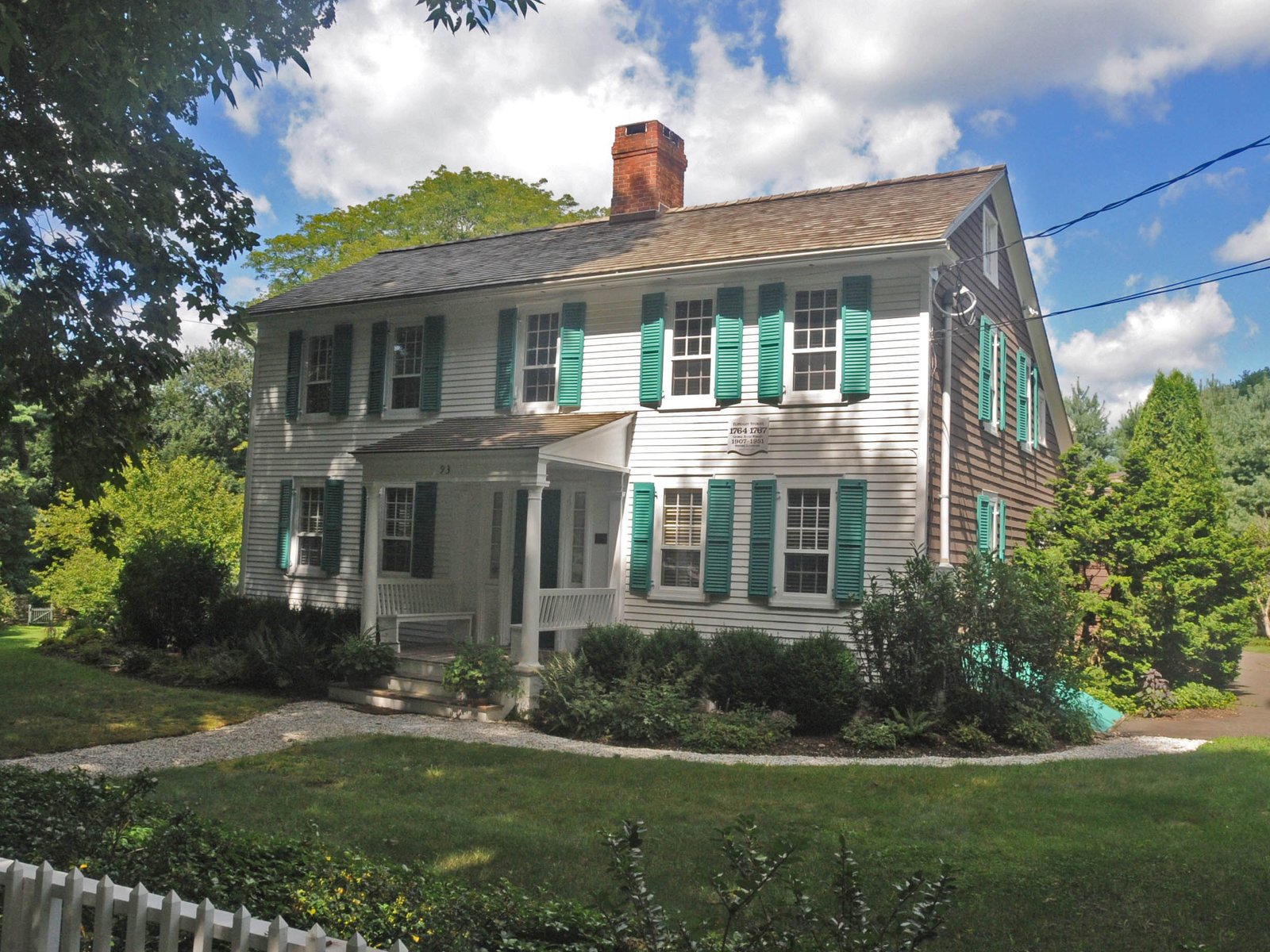
Hero photo: Sturges–Wright House, Westport, Fairfield County, CT, by Jerrye & Roy Klotz, M.D., via Wikimedia Commons, CC BY-SA 4.0; cropped and resized.
Selling the House to a Son or Daughter?
Private, USPAP-compliant fair market value appraisals for intra-family sales, gifts of equity, and Form 709 reporting—current or retrospective to the transfer date. Westchester, Manhattan, and Fairfield County. Court Approved (NY) · SRA · Licensed in Connecticut. Call (914) 413-3800 or request a quote.
Get a Free Quote