
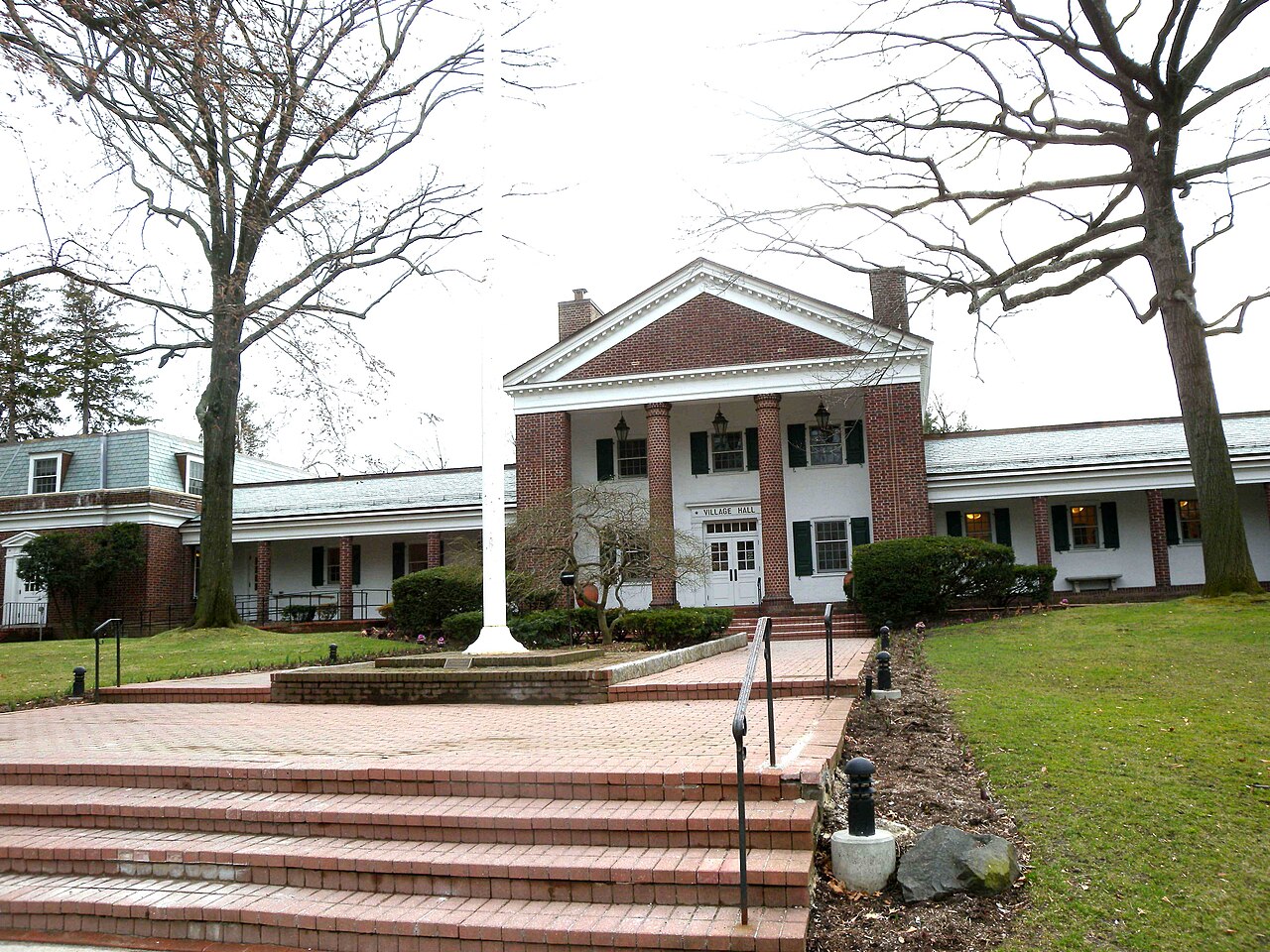
Bronxville is an incorporated village inside the Town of Eastchester — roughly one square mile of mostly early-20th-century residential stock and a compact village commercial core. Published “Bronxville” market reports are useful as a temperature check. They are not a value opinion for any one house. Village-wide medians blend fee-simple single-family dwellings of different eras and renovation levels with condo and co-op interests that do not compete on the same terms. An appraisal has to match the subject’s product type, condition, lot utility, and micro-location. A village median is a briefing statistic.
This September 2026 Insights post reads the latest public mid-year and August snapshots the way an appraiser does: price level, inventory, days on market (DOM), sale-to-list (percentage of asking), and closed volume — without lifestyle framing. It complements the methodology piece Appraising Homes in Bronxville, NY and does not replace a property-specific assignment. Local residential coverage is described on the firm’s Bronxville appraisal page.
Sources: Figures below are attributed to named public brokerage and local market pages checked in September 2026. Different filters (single-family only versus mixed product; village versus broader marketing catchment; end-of-month active versus monthly inventory tables) produce different counts. That is expected. Appraisers reconcile competing series by reading the filter first, then the number.
What the Mid-2026 and August Numbers Show
William Pitt Sotheby’s International Realty publishes a Bronxville market report that can be read with a single-family filter. For August 2026 that report showed:
- Median sold price (single-family): $2.4 million (−11.1% versus August 2025)
- Average sold price (single-family): $2.8 million (−4.5% versus August 2025)
- Units sold (August, single-family): 5
- Average days on market: 21 (essentially flat versus 21 in August 2025)
- Percentage of asking price: 104% (versus 101% in August 2025)
- Average price per square foot: $871 (versus $830 in August 2025)
- New single-family listings (August): 0 (versus 1 in August 2025)
- Year-to-date homes sold: 38 (versus 26 at the same point in 2025; +46.2%)
- Monthly inventory table: 7 single-family and 12 condos/co-ops (single-family inventory −12.5% versus August 2025; condo/co-op inventory −20.0%)
Source: William Pitt Sotheby’s Bronxville market report (August 2026). Information on brokerage dashboards is deemed reliable but not guaranteed; MLS extracts and date stamps can differ slightly across republished agent pages.
A separate first-half 2026 Westchester county roundup ranked Bronxville among the highest single-family medians in the county, with a year-to-date community median near $3,006,250 and average days on market compressed from 41 days to about 17 days versus the first half of 2025 — price essentially flat year over year (−0.7%) while DOM tightened sharply. Source: Jennifer Meyer Homes — First Half of 2026 Westchester County Market Report.
A Village-focused Q2 2026 brokerage recap described the same five-metric pattern in spring: thin inventory after a brief May uptick, single-family sale-to-list near 104–105% in May–June, price per square foot in the mid-$800s, and average DOM as low as 7–11 days in late spring — with June bringing zero new single-family listings into an already thin set. Source: Houlihan & O’Malley — Bronxville Village Q2 2026 Sales Recap.
Those series are not contradictions to average away. A first-half YTD median near $3.0 million, an August single-family median of $2.4 million, and a spring sale-to-list premium all describe a thin village market where a handful of closings can move the monthly median. For appraisal work, what matters is the shared direction: limited interchangeable supply, short DOM when a well-matched dwelling is priced to the set, and sale prices frequently at or above asking inside the competing band.
| Metric (public snapshots) | Reading |
|---|---|
| Price level | H1 YTD median ~$3.0M; Aug SF median $2.4M / avg $2.8M |
| Inventory | 7 SF + 12 condo/co-op in Aug WP table; spring listings thin |
| DOM | ~17 days H1 avg; 21 days Aug WP; single-digit in late spring notes |
| Sale-to-list | 104% Aug WP; ~104–105% May–June Village recap |
| Volume | Aug SF units sold: 5; YTD homes sold 38 (+46% YoY in WP) |
Table summarizes attributed public pages above — not an MLS extract and not a value opinion for any subject property.
In Bronxville, strong and soft are read from price level, inventory, DOM, sale-to-list, and volume — not from a village-wide median applied to a mismatched house. If the comps do not attract the same purchaser on size, condition, lot utility, and section, the multimillion-dollar headline will not salvage the analysis.
Why Village Medians Mislead
A $2.4 million August single-family median — or a ~$3.0 million first-half community median — is a useful headline. It is a poor substitute for matched sales. Common failure modes:
- Village core versus edge / Eastchester context: Bronxville Village is not one competitive pool. Properties near the commercial core, along different street sections, and near the municipal boundary with Eastchester, Tuckahoe, or Yonkers are not automatic substitutes. Adjacency on a map is not a location adjustment of zero. Cross-municipal comps need explicit location support from market evidence — not from a marketing label.
- Era and quality tier: Period Colonials and Tudors, mid-century stock, and later rebuilds of similar living area are different products. A full-gut renovation sale does not automatically support an unrenovated dwelling of similar GLA.
- Sale-to-list is not a blanket premium: A 104% average percentage of asking (William Pitt, August 2026) describes closed single-family outcomes that month. It does not mean every listing will clear at a fixed markup. Overpriced outliers still linger; underpriced, well-presented homes still compress DOM.
- Volume versus price: Only five single-family closings in the August William Pitt snapshot alongside a still-elevated median is a classic thin-market pattern: fewer interchangeable substitutes, wider month-to-month median swings, and more bidding pressure when a well-matched house comes up.
- Condo/co-op versus fee-simple: The same August inventory table shows more condo/co-op units (12) than single-family (7). Those interests are not interchangeable with detached fee-simple comps. Mixing product types is how a village “average” gets misused in private-use files.
For a deeper primer on how appraisers parse medians, MSI, DOM, and sale-to-list, see Market Conditions and How Appraisers Analyze the Stats.
How Appraisers Read Bronxville’s Competitive Sets
Market-conditions commentary in a Bronxville appraisal is built from the sales that actually compete with the subject — not from the village headline alone.
- Bracket condition and quality: Prefer sales that bracket the subject rather than one superior rebuild or one deferred-maintenance outlier.
- Time adjustments from the set: Short average DOM does not erase the need for supported time adjustments when the matched set spans several months.
- Inventory as absorption context: Thin active inventory supports seller-favorable negotiation patterns in many price bands, but the appraiser still documents list-to-sale behavior inside the subject’s band.
- Eastchester-context discipline: Sales outside the Village boundary may be considered only when they truly compete — after location, tax, and marketability differences are supported. “Bronxville” as a postal or marketing label is not the same as the incorporated village competitive set.
- Assessment versus market value: Village assessed value is not market value. Tax-grievance work compares the assessment to a current, supportable market-value opinion — see tax grievance and the firm’s Bronxville tax grievance 2026 note.
Private-Use Assignments When Inventory Is This Thin
Thin inventory and sale-to-list premiums change the conversation for private appraisal work as much as for purchase financing. Zillow-style AVMs and mixed-type village averages do not substitute for matched comps when the file must stand up for counsel or a fiduciary:
- Estate / date-of-death: Retrospective opinions as of a specific effective date for Form 706, probate, or fiduciary accounting — using market evidence knowable as of that date. See estate / date-of-death and alternate valuation date practice.
- Divorce / equitable distribution: Current or retrospective (including date-of-commencement) valuations of the marital residence. Rapid list-to-contract cycles make dual-date and effective-date control especially important — see divorce appraisal and date-of-commencement appraisals in NY divorce.
- Attorney and fiduciary briefing: Counsel often need a plain-English read of whether a proposed buyout or listing strategy is consistent with recent matched sales — not with the village median or an AVM alone.
What Helps a Bronxville Market-Conditions Read
- Confirm the filter: Village single-family only versus mixed product; village versus zip versus marketing-label catchment areas
- Pull closed sales that match the subject’s section, GLA band, condition, and lot utility
- Record list price, sale price, concessions, and DOM for each competing sale
- Note active inventory inside the subject’s price and quality band — not only the village total
- Separate condo/co-op and multi-unit evidence from fee-simple single-family analysis
- Document improvement dates, permits, and major systems so quality ratings are supportable
Final Thoughts
As of the mid-2026 and August 2026 public snapshots, Bronxville’s single-family market reads seller-favorable on the five metrics that matter for appraisal commentary: elevated price levels relative to broader Westchester, thin inventory, short DOM, sale prices frequently at or above asking, and limited monthly closed volume that makes medians swing. Those facts describe market conditions. They do not price any one house.
A defensible Bronxville appraisal still starts with physical evidence and matched sales inside the right competitive set — then places that set against the village statistics as context. Whether the purpose is estate settlement, divorce, tax grievance, or a private purchase opinion, Madison & Park builds the analysis that way across Westchester, Manhattan, and Greenwich CT. Dave Lister, SRA, is a New York and Connecticut certified residential appraiser; Court Approved status applies in New York.
Need an Appraisal in Bronxville?
Whether for estate planning, divorce, tax grievance, or a private market opinion, we provide thorough, professional valuation services across Westchester, Manhattan, and Greenwich CT.
Get a Free Quote