
Greenwich Village is a Manhattan residential market where value is shaped by property type, legal use, landmark constraints, and a sharp split among townhouses, pre-war cooperatives, and condominiums. The West Village is a different competitive set. Greenwich Village sales are not automatic comps for the West Village, and West Village sales are not automatic comps for Greenwich Village. Chelsea, NoHo, and East Village closings are not automatic substitutes either. Borough-wide averages are a weak stand-in for property-specific analysis.
For owners, attorneys, and fiduciaries, a reliable Greenwich Village appraisal focuses on measurable factors: above-grade living area, condition and quality ratings, outdoor-space utility, landmark or alteration limits, cooperative or condominium project features, and recent sales that truly compete with the subject.
Housing Stock and Construction Quality
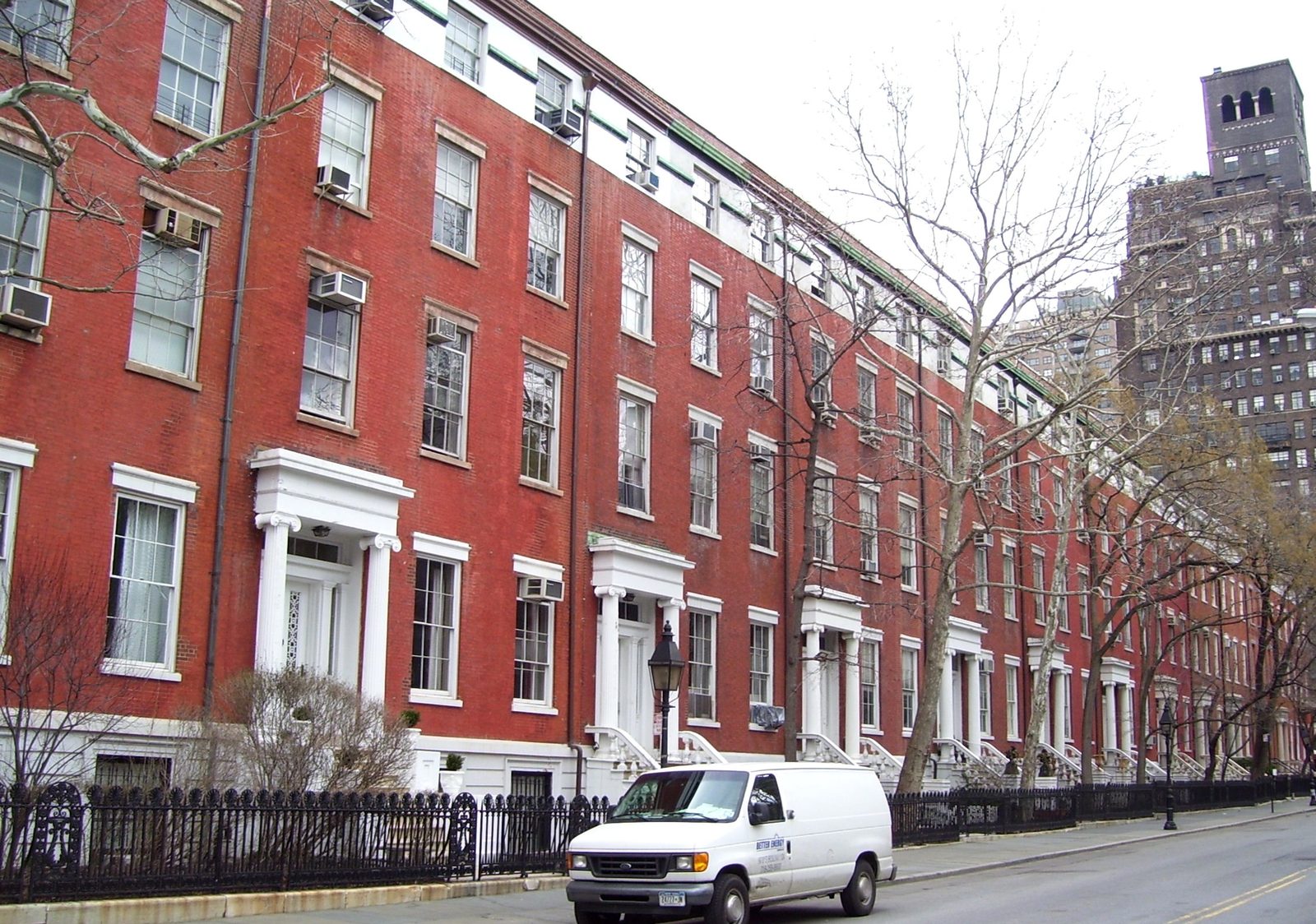
Greenwich Village housing stock is not a single market. Appraisers commonly encounter landmarked rowhouses and townhouses — including Greek Revival rows such as those on Washington Square North — pre-war cooperatives, small elevator and non-elevator condominiums, and mixed-use buildings along commercial overlay corridors. That mix makes property-type matching more important than raw distance.
- Townhouses and rowhouses: Fee-simple dwellings range from largely original 19th-century shells to fully rebuilt interiors behind a period facade. Quality ratings must reflect actual construction, remaining economic life, and the coherence of mechanical systems — not listing language. Rear-yard extensions, roof additions, and garden-level finish are analyzed only to the extent they are permanent, legal, and accepted by the market.
- Pre-war cooperatives: Line, floor level, light, outdoor space, and building financials often matter as much as interior square footage. Maintenance, underlying mortgage, flip tax, and sublet policy are marketability factors documented from offering-plan and financial materials, not from assumptions about the building as a social setting.
- Condominiums: Stacked product is a different property type from a townhouse. Floor level, ceiling height as a utility factor, parking (when it exists), outdoor space, and common charges are matched to competing buildings. A condominium does not compete on the same terms as a classic two-to-four-story rowhouse of similar living area.
- Mechanical systems and deferred maintenance: In older masonry shells, HVAC type and age, electrical service, plumbing risers, roof remaining life, and window performance remain core value drivers. A renovated kitchen does not erase aging roofing, outdated electrical service, or a building-wide capital need.
- Additions, garden levels, and lower-level space: Added living area only contributes fully when it is permanent, market-accepted, and properly finished. Below-grade or garden-level space is analyzed separately from above-grade gross living area under standard residential methodology. Illegal conversions and unpermitted rear-yard structures require legal-use analysis before they can be treated as living area.
Because Greenwich Village includes both modest cooperative units and high-spec rebuilt townhouses, two sales on the same block can require large quality, condition, or property-type adjustments. Accurate Q and C ratings, supported by photos and market evidence, are central to a defensible report.
Site Factors, Landmark Limits, and External Conditions
Lot and legal characteristics often separate otherwise similar Greenwich Village dwellings on value. Lot size alone is not enough — usable outdoor area, light and exposure, landmark jurisdiction, and external influences all matter.
- Narrow lots and outdoor utility: A smaller lot with a functional rear garden, terrace, or usable roof can outperform a larger footprint with little outdoor function. Outdoor space is valued from competing sales, not from a generic premium.
- Landmark and historic-district constraints: A large section of Greenwich Village sits in the Greenwich Village Historic District, designated by the New York City Landmarks Preservation Commission in 1969, with later extensions in adjoining blocks. LPC review, facade limitations, and limits on visible rooftop or rear-yard alterations are functional and cost constraints. They are documented as they affect utility, time, and cost to modify the improvement — not as lifestyle labels.
- Zoning, FAR, and legal use: Floor-area potential, certificate of occupancy, number of legal units, and commercial overlay along corridors such as Broadway, 8th Street, and parts of 6th Avenue belong in highest-and-best-use analysis. A dwelling marketed as a certain unit count must be checked against legal permissibility and how the market actually prices that use. Ground-floor commercial space is a land-use and income question, not a neighborhood-character label.
- External influences: Immediate proximity to heavier commercial corridors, wider crosstown routes, or concentrated institutional uses is adjusted from local market evidence. Interior residential blocks with fewer external negatives often support cleaner comps and tighter location adjustments.
- Transit and regional access: Properties with immediate access to multiple subway lines can show different demand profiles than more secluded mid-block sites. Appraisers capture that through competitive sale selection rather than generic premiums. Access is not described as a lifestyle attribute.
Market Conditions and Comparable Selection
Comps strategy is the main appraisal challenge in Greenwich Village. Turnover is uneven by property type and price band, and a townhouse does not trade on the same terms as a pre-war cooperative or a small condominium a short distance away.
- Compete on utility and property type, not just distance: A sale a short distance away may still be a weak comparable if dwelling type, outdoor space, landmark status, or cooperative versus condominium versus fee-simple ownership diverge from the subject.
- Greenwich Village and the West Village are separate competitive sets: The West Village occupies the western portion of the broader Village area and has a different mix of townhouses, cooperatives, condominiums, and sale patterns. Greenwich Village sales are not automatic comps for the West Village, and West Village sales are not automatic comps for Greenwich Village. Cross-neighborhood comps require location support from data, not proximity alone. Chelsea, NoHo, and East Village closings need the same discipline.
- Cooperative methodology: For co-ops, appraisers match on rooms, line, outdoor space, and building financials, including maintenance and underlying debt as they affect marketability. In-building or in-complex sales often outperform a distant cooperative that does not compete on size, finish, and carrying cost.
- Condominium methodology: For stacked product, match on building, floor, view or exposure, outdoor space, parking, and common charges. Project sale history inside the same building often outperforms an out-of-project sale that does not compete for the same purchaser.
- Townhouse methodology: Fee-simple comparisons should bracket width, condition, outdoor space, legal unit count, and the extent of structural or systems work. A fully rebuilt interior behind a landmarked facade is not interchangeable with a largely original shell of similar exterior size. A Washington Square or University Place townhouse is not interchangeable with a West Village rowhouse solely because both are downtown masonry dwellings.
- Time and price-band discipline: Recent closed sales remain preferred. When inventory is thin in a given quality tier or property type, the appraiser may expand the time window or carefully test nearby competitive areas, with location differences supported by data.
- Assessment versus market value: NYC assessed value and tax-class figures are not market value. Tax-grievance or planning assignments compare the assessment to a current, supportable market-value opinion. That analysis is about the assessment roll and physical property, not about local services.
In Greenwich Village, the best appraisals start with competitive sale selection. If the comps do not attract the same purchaser in terms of size, condition, property type, and site utility — especially townhouse versus cooperative versus condominium, landmarked versus less-constrained improvements, and Greenwich Village versus West Village location — the math will not salvage the analysis.
Appraisal Challenges Specific to Greenwich Village
Several issues recur in local residential assignments:
- Multiple property types on the same block: A rebuilt townhouse, a pre-war cooperative, and a small condominium can sit within a short distance of each other. Unadjusted sale-price comparisons across that split are misleading.
- West Village substitution: Using a West Village closing as an unadjusted comparable for a Greenwich Village subject, or the reverse, is a recurring error. The neighborhoods share downtown Manhattan infrastructure, but they are not the same competitive set.
- Listing living area that does not match appraisal GLA: Garden levels, below-grade rooms, and informal floor plans are common. Appraisers measure and classify area under standard residential methodology rather than adopting marketing square footage.
- Partial updates in older dwellings: Mixed-grade renovations can create functional obsolescence even when individual rooms look current. This is common in cooperative inventory and in townhouses with multi-cycle renovation histories.
- Landmark delay and cost as a value factor: Proposed work that requires LPC approval can affect both cost and timing. Those are documented as property-specific constraints when the assignment requires a prospective or as-renovated analysis.
- Thin matched-sale sets at the extremes: Extra-wide townhouses, highly customized interiors, and atypical conversions may require broader search parameters and larger, better-supported adjustments.
- Legal use and unit count: Some rowhouses have two-unit or multi-unit layouts, accessory space, or conversion histories. Highest and best use, legal permissibility, and how the market actually prices that utility must be documented.
What Helps an Appraisal in Greenwich Village
- Written list of improvements with approximate dates and costs
- Permit and LPC history for additions, rooftop work, kitchens, baths, and major systems
- Clear access to cellar or garden level, roof, and rear yard
- Certificate of occupancy, offering plan, or house rules when the property is a co-op or condominium
- For cooperatives: recent financials, underlying mortgage summary, flip-tax and sublet rules, and recent in-building sales
- For condominiums: common charges, parking allocations, floor/exposure description, and recent project sales
- For townhouses: survey or tax-lot documentation, legal unit count, and invoices for structural, roof, HVAC, electrical, or plumbing work
Final Thoughts
Appraising residential property in Greenwich Village is a comps-driven, property-type-sensitive assignment. Accurate value depends on reading housing stock correctly — especially the split among townhouses, cooperatives, and condominiums — measuring condition and quality with discipline, and selecting sales that truly compete with the subject on utility and location.
Whether the purpose is estate settlement, tax grievance support, divorce, financing, or portfolio review, a defensible Greenwich Village appraisal is built from physical evidence and local market data — not assumptions imported from the West Village, Chelsea, or a borough-wide average.
Need an Appraisal in Greenwich Village?
Whether for estate planning, tax grievance, or a mortgage transaction, we provide thorough, professional valuation services across Manhattan and the tri-state area.
Get a Free Quote